
 Menu
Menu987-65-4329
987-65-4329

 555-666-0606
 Economics Director, CGA Honors Program Advisor, USA
Received Date: 20/09/2016; Accepted Date: 22/10/2016; Published Date: 28/10/2016
Holocaust education, Ethics, Leadership development, Genocide, Threat
The Holocaust provides us with awareness that democratic institutions and values are not automatically sustained; and that the Holocaust occurred because individuals, organizations and governments made a choice which legalized discrimination and permitted hatred and murder to occur.
A series of coordinated, deadly attacks at seven locations around Paris killed at least 125 people and injured another 200 on Friday November 13th, 2015, just a week before the start of the American Service Academies Program (ASAP) Symposium at the U.S. Coast Guard Academy. While the deadliest terrorist attacks since 9/11 would have distracted from many other educational events, they highlighted the importance of the topic of the ASAP Symposium: Lessons from the Holocaust.
While individuals in nearly all human societies have engaged in the systematic killing of other humans in civil, ideological, and international wars, there was hope that the twenty-first century represented a departure from its predecessor the bloodiest on record. Keeping this hope alive requires that humanity remember and apply the lessons of twentieth century conflict particularly, how prejudice and disinformation can lead citizens of developed societies with broadly democratic institutions to justify and even participate in mass atrocity. The chief object lesson in understanding this danger is undoubtedly the Holocaust. Understanding how the Holocaust could happen is crucial to developing effective responses to today’s atrocities, and to preventing widespread genocide in the future [1].
For this reason, the U.S. Coast Guard Academy Honors Program selected “Lessons from the Holocaust” as the theme of the 2015 ASAP Symposium. Although the Symposium focused on lessons from the Holocaust, its emphasis was on how those lessons can help us figure out how to respond to the Paris attacks and the Syrian refugee crisis, and how to stop the ongoing genocidal campaigns in Iraq, Equatorial Africa, and Myanmar. The result was a unique educational event in which history and current events combined to illuminate each other and to enrich the experiences of participants in the program.
The Holocaust is one of the most horrifying, disturbing, and powerful illustrations of genocide in human history. Historians, political scientists, sociologists, psychologists, and theologians from all over the world have engaged in its grim accounting and wrestled with its implications. The Holocaust has become the standard through which other mass atrocities and convulsions of violence are perceived, presented, and prevented. Far more than a stain on the history of the German nation, where its denial or celebration is a crime, the Holocaust has become mankind’s signature moral catastrophe.
During the first decades after the end of the Second World War, most Germans considered Hitler and the Nazi leaders to be solely responsible for the Holocaust, but they ignored the involvement of the German state and society in planning, organizing and implementing the genocide. Therefore, Holocaust education has focused on understanding the processes that brought about a mass murder and genocide. Perpetrators of the Holocaust were not only Nazi leaders like Hitler. The SS and policemen who committed mass murder in the camps and at the shooting ditches or Polish streets during so called “Lapanka” also contributed to the process of destruction, to the discrimination against and isolation of Jews, and to their systematic expropriation and deportation [2].
Beyond political and bureaucratic culpability. However, there are the more or less conscious decisions, actions, and, importantly, inactions by citizens in German, Axis, Occupied and Allied territories. Recognition of this diffusion of responsibility is central to combating the tempting misinterpretation which sees systemic violence as a purely top-down phenomenon by some inscrutable “other.” This misattribution is, in part, what Arendt had in mind with her phrase, “the banality of evil”: the most disturbing aspect of terror is how otherwise decent individuals can become thoroughly desensitized to it.
While the Nuremberg Trials and other national, military, and international legal processes were able to convict and hold accountable those responsible for war crimes and crimes against humanity in the post war period, the kind of collective guilt alluded to above could not be prosecuted on the basis of the existing criminal code after the collapse of the Nazi regime. A specifically moral analysis of history, conflict, and society recognizes the elusiveness of collective responsibility and helps overcome this problem in at least two complementary ways. First, it helps fill gaps in accountability by orienting contemporary law and policy toward victims, for example in the remuneration of families whose art and other property were stolen during the war.
Second, and more importantly, moral analysis of collective responsibility for atrocity helps reconstruct a more accurate and nuanced understanding of history for the living, with the specific aim of preventing its recurrence. This particular use of history contradicts the sterile, objective, and amoral caricature of history as value-free, it most certainly is not. The primary lesson remains, however, that none of us ought to rely on another to do the crucial work of remembering for us, lest we collectively misremember, if not willfully distort. This cuts to the very heart of the common but never clichéd phrase, “never again.”
The central aim of Holocaust education is therefore to communicate this crucial concept of collective responsibility and to show how it highlights both individual autonomy (for example, the ability and responsibility to make moral judgments) and humans’ fundamental interdependence. Each of us has both an individual and a collective responsibility to help prevent tragedies of this scale. The Shoah, though principally directed at Jews and their sympathizers, also befell Gypsies, socialists, homosexuals, and the disabled. It represents how any part of human identity, whether inscriptive like ethnicity or chosen like religion or party, can become the “other” the object of another’s hate. It highlights our mutual vulnerability as humans as one ground for our mutual respect [3].
Even if it is widely acknowledged that teaching about the Holocaust is a moral duty, it remains perhaps the most challenging task of 21st century education. While most students are interested in learning about the history of the Second World War and even the Holocaust they react with discomfort and distress to the images and implications of that history.
Scholars have labeled the Holocaust one of the defining events of the twentieth century, and political and military leaders have confirmed never to let mass murder based on race, ethnicity, or religion happen again. However, genocide has continued, very often in the context of warfare or terrorism, and as a result it is imperative for cadets as future military leaders to hold a deep understanding of the contexts in which genocide or any form of terrorism occurs and the role militaries have played in both causing and preventing them.
When military leaders lack the knowledge of their own role in preventing and causing past tragedies, there can be serious consequences. The racial ideology that motivated the German government prior to and during WWII allowed for and encouraged actions that had never occurred before in human history. Therefore, it is critical to provide cadets with academic studies and leadership training opportunities that focus on the Holocaust and genocide issues.
Holocaust education requires educators to expose students to the moral and ethical elements of genocide and let them face the reality of crimes perpetrated, to commemorate the victims and to sustain a meaningful dialogue between history and memory. Many people risked everything to leave a trace of what happened to themselves, their families and their communities, so that their story would not be forgotten. Several scholars believe that academic programs have an obligation to the victims and their legacy, as well as to the survivors who speak for them, to ensure that their stories are heard and will be studied for generations to come.
Holocaust education as human rights education aims to develop an understanding of our common responsibility to make human rights a reality in every community and in society at large. This kind of education has been critical, especially since it is not only about appreciating and respecting human rights, but also about stimulating personal action in order to guarantee they are respected. Human rights education, therefore, has a much broader scope than combating xenophobia, intolerance and racism. Especially in developing countries, perhaps the most important objective is to help people to self-empowerment. In this respect, promoting economic and social improvement is also an important objective. It should be noted that human rights education also aims to develop a school system in concordance with human rights, i.e. education should be carried out in ways that are democratic and non-authoritarian.
Holocaust education and human rights education are thus both most effective when they are delivered together. In the absence of human rights education, Holocaust education becomes merely information about a sequence of historical events that sheds little insight upon contemporary atrocities and never addresses our collective responsibility to prevent them. Without Holocaust education, human rights education remains completely abstract; we cannot fully understand the importance of human rights until we look at the disastrous consequences that result from asserting that certain groups are less than fully human, and thus do not have any human rights [2]. When Holocaust education and human rights education are combined, however, they can lead students to understand how important it is to attribute human rights to everyone, and to work to end widespread violations of those rights.
Background on the USCGA
While the USCGA may seem like an odd place to combine Holocaust education and human rights education, its mission, its students, and its focus on educating leaders of character make it perfectly suited for such an undertaking.
The USCGA, located in New London, Connecticut, is the smallest of the United States federal military academies. It offers bachelor degrees in several majors: Civil Engineering, Electrical Engineering, Mechanical Engineering, Naval Architecture and Marine Engineering, Government, Management, Operations Research and Computer Analysis, and Marine and Environmental Science as well as in Management, Government, Operations Research and Computer Analysis, and Marine and Environmental Science. The USCGA’s mission is to educate, train and develop leaders of character who are ethically, intellectually, and professionally prepared to serve their country and humanity.
Since 1876, leadership, moral, ethical, and honor education have been fused into the training of the Corps of Cadets and addressed by the enforcement of the Honor Code and Leadership training programs. An Academy-wide culture of leadership is required to facilitate learning across military, academic, and athletic programs. Cadets are exposed to the concepts of leadership, to moral-ethical philosophies, and to our core values of honor, respect, and devotion to duty through various curricular and extracurricular programs.
During four years of academic, military and athletic programs, the Commandant of Cadets, the Academic faculty, Department of Athletics, and the Leadership Development Center work together with the Corps of Cadets to guide and monitor cadets’ development, their adherence to our core values, and their implementation of moral-ethical and leadership skills.
As, USCGA cadets develop as leaders through four stages: leading self, leading others, leading performance and change, and leading the Coast Guard. This model, based on the CG leadership model as shown in Figure 1, could be adopted by other academic institutions as they strive towards preparing future leaders for professions within both the private and the public sector. According to Table 1, these four stages require cadets to develop several competencies over four years: team building, communications, ethics, accountability, conflict management, and technical proficiency. During their freshman year, the focus is predominately on the competencies detailed in the “leading self” category. Freshman year is one of the most important stages of a student’s academic life where much of self-discovery, understanding of the academic system, as well as an early development of technical proficiency in the areas of study and learning take place [4]. With each progressive year, the students shift their focus to the next set of competencies, while still working on honing their skills in the previous categories.
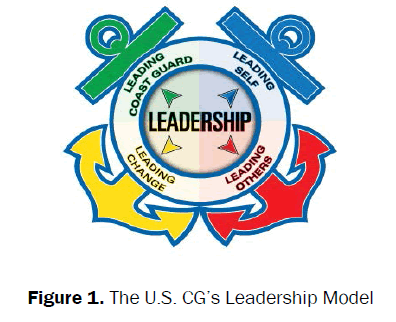
Figure 1: The U.S. CG’s Leadership Model
Table 1. The USCGA’s Leadership Development Framework.
| Leading Self | Leading Others | Leading Performance and Change | Leading the Coast Guard |
|---|---|---|---|
| Accountability and Responsibility | Effective Communications | Conflict Management | Financial Management |
| Aligning Values | Team Building | Customer Focus | Technology Management |
| Followership | Influencing Others | Decision Making and Problem Solving | Human Resource Management |
| Health and Well Being | Mentoring | Management and Process Improvement | External Awareness |
| Self-Awareness and Learning | Respect for Others and Diversity Management | Vision Development and Implementation | Political Savvy |
| Personal Conduct | Taking Care of People | Creativity and Innovation | Partnering |
| Technical Proficiency | Entrepreneurship, Stewardship, Strategic Thinking |
The USCGA has developed an approach to developing leaders of character that consists of five basic components: academics, military, athletics, service learning, and learning through participation in clubs and student organizations, as presented in Figure 2. As Figure 2 illustrates, credit-bearing academic courses are only one of many methods for accomplishing the learning goals for the USCGA’s cadets; this is especially true for goals related to leadership development. Some of the shared educational goals for cadets are achieved primarily through specially coordinated military, residential life, and co-curricular activities. Such learning is not classroom-based and is not fostered by an instructive pedagogy. The extra-curricular learning goals typically focus on selfleadership skills, attitudes, and values; they help students apply knowledge and concepts in practical situations and provide opportunities for the integration and application of knowledge. Cadet learning outside the classroom occurs through contact with other cadets, through their interaction with particular programs, and through various environments in which they function and work. Cadets have considerable discretion to select, organize, and reflect upon their leadership learning experiences as part of their leadership development process.
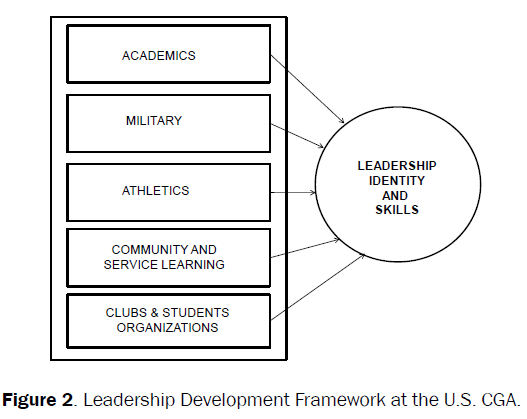
Figure 2: Leadership Development Framework at the U.S. CGA.
In addition to academics, students are challenged non-academically (militarily, athletically and social) through daily interactions with each other, USCGA faculty and staff, and through structured military and athletic training opportunities. With over 30 National Collegiate Athletic Association (NCAA) sanctioned teams and multiple nationally ranked sports club, cadets have numerous opportunities to develop and practice their leadership skills. Through these three basic components, students are introduced to balancing competing time demands for themselves and others. Successful students learn to manage their time well in meeting their academic and non-academic responsibilities at the Academy. In order to meet the requirements of graduating cadets in four years, there is significant mentoring and advising that takes place throughout students’ years at the Academy. Three advisors (academic, military and athletic) work with each cadet to monitor their moral, ethical, intellectual development, personal and professional growth.
The academic component of leadership development is supported by a strong “Core Curriculum” which includes humanities, ethics, and leadership courses in addition to courses in science, math, engineering, and nautical science. This “Core” of 102 credits must be successfully completed by every student prior to graduation in addition to the requirements for a specific major. Two courses in particular, Moral and Ethical Philosophy and Organizational Behavior and Leadership, focus on the development of leaders of character. The Moral and Ethical Philosophy course not only covers traditional moral theories (such as utilitarianism, deontology, and virtue ethics) but also helps students develop their own moral voices and grapple with scenarios similar to those they are likely to encounter as Coast Guard officers.The Organizational Behavior and Leadership course covers theories of leadership (such as participatory, situational, and transformational leadership) and helps cadets develop their own personal leadership philosophy.
At the Coast Guard Academy, academic and non-academic approaches to developing leaders of character are closely integrated with each other. For example, the Moral and Ethical Philosophy course focuses on the Coast Guard’s core values of Honor, Respect, and Devotion to Duty, and works closely with the Cadet Honor Board to educate cadets about the importance of not lying, cheating, or stealing and to make recommendations regarding cadets who do so. The Organizational Behavior and Leadership course covers materials on leadership and “followership” which reinforce the efforts by our Cadets against Sexual Assault organization to stress that there are no innocent bystanders: those who stand by and allow immoral acts to occur are guilty bystanders. This integration of academic scholarship and real-world application also informs our approach to teaching about the Holocaust.
Teaching the Holocaust at the USCGA
Teaching and learning about the Holocaust calls attention to universal issues that are central to efforts to promote peace and mutual understanding. The USCGA Honors Program, under the leadership and supervision of the Director of the CGA Honors Program, provides its members with the opportunity to participate in the American Service Academies Program (ASAP). This program is a three-week summer educational initiative that was created by the Auschwitz Jewish Center for select groups of cadets and midshipmen from the four U.S. military academies. The ASAP accepts cadets from all fields who exhibit a dedication to extracurricular endeavors, an interest in cultural issues and a strong commitment to community service. Most importantly, those selected cadets must demonstrate outstanding academic achievement, exceptional leadership potential and strong communication skills in order to convey what they learned in Poland to their peers at the Academy. Over the last eight years, with funding provided by a class of 1955, the Honors Program was able to send fourteen cadets to the Holocaust summer training through the ASAP [5].
The ASAP Program provides an opportunity for cadets to visit the memorial sites particularly at historic location of Oswiecim, Poland that is vitally important in terms of providing information about the Holocaust. Visits to memorial sites are opportunities for holistic learning and chances to gain experiences that cannot be replicated in the classroom. Visits to memorial sites are the high point of the learning process, bringing together all the expectations and hopes relating to Holocaust education and are the culmination of Holocaust education in the ASAP.
Each year at the end of the ASAP, selected cadets from all Service academies travel to the Auschwitz Jewish Center that is located on the site of the largest Nazi concentration and death camp, around 60 kilometers to the west of Cracow, in the suburbs of the town of Oświęcim. During their trip to Poland, cadets visit the town that was renamed ‘Auschwitz’ by the Nazis after the annexation of Upper Silesia by the Third Reich at the beginning of WWII. They also visit the place on which Heinrich Himmler ordered the construction of the camp in April 1940 (Auschwitz I), which in the following years was expanded with the establishment of Auschwitz II – Birkenau, Auschwitz III – Monowitz and more than 40 sub-camps. Cadets learn that during the first two years, Auschwitz was mainly a concentration camp for Polish prisoners (140,000 deportees), Soviet Prisoners of War (15,000 deportees) and other non-Jewish prisoners.; From 1942, Auschwitz became the destination for mass deportations of Jews from all over Nazi-occupied Europe; 200,000 Jews were deported to Auschwitz-Birkenau in 1942, in 1943 around 270,000, and in 1944 more than 600,000. Students also hear that the majority of prisoners were never registered in the camp files as they were selected as ‘unfit for work’ by the SS and murdered in gas chambers on arrival. By traveling to the Auschwitz to study Holocaust, CGA cadets learn that the Holocaust was not an accident in history and that it occurred because individuals, organizations, and governments made choices that not only legalized discrimination but also allowed prejudice, hatred, and ultimately, mass murder, to occur.
The educational resources at the Auschwitz-Birkenau State Museum provide the future officers with a specially guided tour which is coordinated by the visitor service. The starting point for learning about history is the authentic site and the structural remnants of the camp. The guided visit for the cadets is delivered together with classes and group workshops, and discussions before viewing the different elements of the memorial site. Cadets can choose the thematic focus of visits and workshops, from ‘Holocaust denial’, ‘from number to name’ and ‘finding the footprints’. A range of different preparatory materials is available for memorial site visits and varies depending on specifically what cadets are expected to learn and study. The educational materials include contemporary witness reports, original documents and objects collected, which serve as proof that the past can be related to the present.
According to the CGA cadets’ reports, the focus of the ASAP internship is to study the victims of Nazi crimes, those responsible for these crimes are also the subject of discussion, especially within the scope of the seminar events. Great importance has also been attached to the scholarly foundation of the educational work, based on a specific set of values, including the rejection of racism and anti-Semitism, as well as a focus on democracy and human rights. Cadets mentioned that both the overall design of the site and its educational approach emphasize a thorough and independent examination of history on the part of visitors, pyramid of Hate as shown in Figure 3. The learning process through the site visit reflects not just the historical level, but also constructions of history. Various media and materials were available and taken into account.
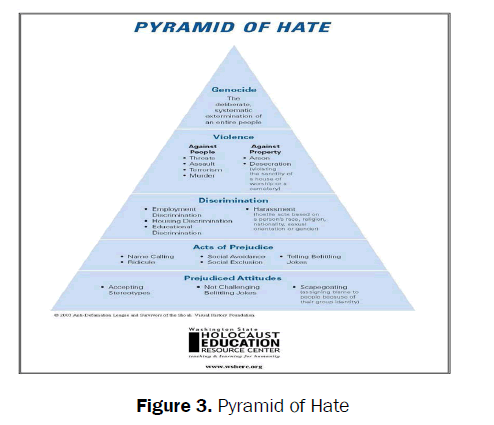
Figure 3:Pyramid of Hate
Educating about the Holocaust through the ASAP helps future CG leaders and other armed forces understand key concepts that are also critical when studying other examples of mass violence or terrorism. When cadets explore the history of massive human rights violations, they are able to draw on their understanding of the Holocaust and become more aware of their own responsibilities as global citizens, followers and finally leaders in armed forces. Given the fact that genocide, mass atrocities and violation of human rights are not merely historical but also contemporary realities in the twenty-first century, a careful study of the Holocaust provides a comprehensive understanding of the political, economic, and social ramifications of the many faces of discrimination, prejudice, and intolerance. The identification of groups as “others”, their stereotyping, stigmatization, de-humanization and ultimate destruction can be seen not only in the treatment of Jews and the Roma by the Nazis, but also in the genocide of the Tutsi in Rwanda (1994) or the ideologically-driven class warfare of the genocide in Cambodia (1975-1979), and the most recently during the 9/11 or the 2015 Paris tragedy. An analysis of the mechanisms that led to the Holocaust helps the ASAP participants from all service academies recognize the importance of accepting and appreciating diversity rather than seeing it as a cause for discord. Teaching and learning about the Holocaust sensitizes cadets to the position of minorities or diversity group and also to the cruel and evil tendencies and intentions of the terrorist groups such as ISIS.
Today, we witness an increasing rate of terrorism, violence, discrimination and social injustice towards individuals of different ethnicities, religion or race. Keeping in mind the increasing popularity of far-right ideologies and the absence of a non-institutional platform for learning about the Holocaust and injustices of Nazi regime, USCGA is committed to broadening cadet exposure to the Holocaust beyond the relatively few cadets who are able to visit the concentration camp sites. To this end, USCGA held the 2015 USCGA American Service Academies Program (ASAP) Holocaust Symposium on Saturday, 21 November 2015. At this symposium, the CGA Honors Program hosted cadets and midshipmen from the US Military Academy and US Air Force Academy, and students from Connecticut College for the 2015 USCGA ASAP Holocaust Symposium as well as several Alumni of the ASAP Program.
The 2015 USCGA ASAP Symposium was organized to expand cadets’ knowledge about the Holocaust, to speak out about the Nazi regime in the context of cultural, educational, and state institutions. The goal of the Symposium was to promote awareness about genocide and the ethical dilemmas armed forces officers face during commissioned service. Several cadets who were selected for the ASAP Holocaust Internship from their respective academies (USCGA, USAFA, USNA, and USMA) by the Museum of Jewish Heritage in New York City to study genocide and the Holocaust in Oswiecim, Poland between 2008 and 2015 volunteered to participate in the Symposium and share their experiences from visiting the concentration camp sites.
The ASAP Symposium was organized through the USCGA Honors Program to provide cadets with an authentic learning experience about the Holocaust and issues related to genocide, terrorism, injustice, intolerance, and atrocity that extend beyond what they are taught in the classroom. This was the second ASAP Symposium organized by the Honors Program since 2008. As the ASAP supports the mission and makes the USCGA the center of academic excellence on leadership education and Holocaust training, the Honors Program brought together cadets from participating academies to discuss moral and ethical issues of Holocaust, genocide, and terrorism with U.S.CGA staff, faculty, and cadets. Members from the Museum of Jewish Heritage in New York City were also in attendance, including the director of the ASAP Fellowship, Ms. Shiri Sandler.
After a short presentation by Mr. Shiri Sandler on the history and objective of the ASAP program, USCGA Cadets and Midshipmen and Alumni of the ASAP from the last eight years formed a discussion panel in order to share their experiences from attending the ASAP and studying in Poland with all 4/c USCGA cadets, faculty and staff and with the presence of the Academic Dean and the USCGA Commandant of cadets. The following questions and answers allowed all participating cadets and midshipmen recognized the ethical implications of the Holocaust.
The second part of the Holocaust Symposium consisted of a lecture Lessons from the Holocaust delivered by Professor XXX. A copy of this lecture is provided in Appendix 1. Professor XXX provided a platform for group discussions on the lessons learned on moral and ethical issues of the Holocaust. Through discussion and exchange of opinions, the 4/c cadets were expected to appreciate the importance of accepting diversity and respecting differences, and the dangers of failing to do so. The Symposium also opened up a platform for discussions about the importance of leadership and silent followership in organizations by focusing on individuals who were neither victims nor murderers, but whose silence made the Holocaust possible.
During lunch time, Mrs. Gisela Marianne Adamski, a Holocaust survivor, spoke about her Auschwitz experience during the 1940s. Mrs. Gisela Adamski stated that after surviving the horrors of Auschwitz, she developed a strong obligation to share her Holocaust experience. During her testimony, Mrs. Adamski stated that no one should ever have to live through what she and other prisoners of the Nazi’s camps went through. Her testimony added greatly to cadets’ understanding of history and enriched their experiences on Nazi’s genocide. Mrs. Adamski concentrated on the various destructive policies carried out by Nazi Germany and its collaborators and she paid attention to the policies particular to a given genocide.
By listening to a personal story, cadets discovered an individual experience that exposed them to the story of lives before and after the Holocaust where a speaker emphasized the cultural and historical dimensions of genocides and crimes against humanity. A careful comparison of the Holocaust with other examples of mass discrimination and violence that took place in Poland after the creation of the Soviet bloc regime (for example the Katyn genocide and other discriminative techniques used by the communist government in Poland) helped cadets to identify common patterns in the genocidal process at different times of history. Discussion during lunch facilitated the understanding of specificities and differences between events of mass violence [1,3].
The purpose of the Symposium was to teach cadets that genocides occur because people and governments make decisions that perpetuate discrimination and persecution. When focusing on those political choices, cadets were expected to gain valuable insights into the making of history. For instance, by exploring why governments throughout Europe and the Americas restricted immigration just when oppression against Jews became greatest, cadets realize that political decisions can have horrific consequences. When later examining other instances of genocide and crimes against humanity, such as the recent problems in Syria and Iraq, cadets will be able to understand that man-made catastrophes are not accidents of history but can be prevented. When studying the Holocaust carefully, cadets realize that events cannot be simply explained but are the result of multiple historical, economic, religious and political factors. In turn, this contributes to the understanding that preventing genocide and mass atrocities can begin with the identification of warning signals.
The Symposium participants were able to study and work in groups to explain that the Holocaust has the characteristics that appear in other genocides (e.g. a specific victim group or groups, mass violence against that group, and deprivation of the essentials for human existence), but that it also contains elements that cannot be found prior to its occurrence. Cadets discussed the motivations behind the intention of the Nazis to murder each and every Jew in the territories under their domination. Furthermore, they focused on the genocide of the Jewish people that served no pragmatic purpose. Cadets learned through discussion that while other genocides and mass atrocities often have economic, political, or military motivations, the murder of the Jews had none of these incentives. The purpose was to have cadets understand that their destruction was based on a racist ideology that held that “Race is the decisive and molding force in the life of nations. Language, culture, customs, piety, traditions, lifestyle, but also laws, governmental forms and economies, the whole variety of life is racially determined”. By examining this history, cadets increased their awareness of the danger of genocide in the contemporary world and brought to the front an appreciation for individual rights and universal values [6-10].
Group discussions and study of the Holocaust during the 2015 USCGA ASAP Symposium led cadets to think about political responsibilities and explore the functioning of governmental structures. As the Holocaust was a State enterprise legitimized by the law, its study clearly raises questions of the use and abuse of political power for violent purposes on a national level and, ultimately, on an international level. For instance, an understanding of the role of governmental and quasi-governmental organizations and paramilitary units in attacking and almost destroying the Jewish population, not only of Germany but of most of Europe, will raise cadets’ awareness about the roles and responsibilities of the State, of individuals and of society as a whole in the face of increasing human rights violations. These experiences should lead cadets to go beyond a simple commitment not to participate in atrocities themselves, and help them develop the moral courage they will need to prevent others from committing such atrocities.
The Holocaust has been a determining event for the world in which we live, holding moral meanings relevant to all societies and to every individual. The study of the Holocaust requires an understanding of social and political processes such as persecution of minorities and racial intolerance, and an awareness of their relevance to current societal problems. Studying the Holocaust provides a context for exploring the dangers of remaining silent, apathetic, and indifferent in the face of the oppression of others. Holocaust history demonstrates how a modern state, such as Germany, utilized its technological expertise and bureaucratic infrastructure to implement destructive policies ranging from social engineering to genocide. Studying the Holocaust helps cadets think about the use and abuse of power, and the roles and responsibilities of individuals, organizations, and nations when confronted with civil rights violations and policies of genocide. As students gain insight into the many historical, social, religious, political, and economic factors that cumulatively resulted in the Holocaust, they gain awareness of the subject’s complexity and a perspective on how a convergence of factors can contribute to the disintegration of democratic values. Students come to understand that it is the responsibility of citizens in any society to learn to identify danger signals, and to know when to react.
The USCGA Honors Program recognizes that the history of the Holocaust provides one of the most effective, and most extensively documented, subjects for a pedagogical examination of basic moral issues. A structured inquiry into Holocaust history yields critical lessons for an investigation of human behavior. A study of the Holocaust also addresses one of the central tenets of education in the United States, which is to examine what it means to be a responsible citizen, officer, leader and follower. Through a study of the Holocaust, cadets also come to realize that democratic institutions and values are not automatically sustained, but need to be appreciated, nurtured, and protected. They also learn that silence and indifference to the suffering of others, or to the infringement of civil rights in any society, can unintentionally perpetuate the problem. The 4/c cadets who participated in this Holocaust Symposium learned that the Holocaust was not an accident in history; it occurred because individuals, organizations, and governments made choices that not only legalized discrimination but also allowed prejudice, hatred, and ultimately mass murder to occur.
Holocaust education is imperative because teaching about the Holocaust raises challenges for educators as the material they teach leaves students struggling with disturbing ethical questions. Teaching and learning about the Holocaust, and the history of genocide, provides an opportunity to engage students in deep reflection on the origins and mechanisms of violence, so that they can better understand the past and the world they live in when terrorism and genocide become every day realities. Holocaust education is essential today and is necessary to raise awareness about a shared history, to promote human rights everywhere and eliminate all forms of discrimination, intolerance, genocide, and terrorism. Holocaust education teaches that prejudiced attitudes, acts of prejudice, discrimination practices, and violent acts are primary factors that can lead to genocide as illustrated in the Pyramid of Hate.
The CGA Honors Program also considers the Holocaust and genocide education to be critical for the Academy’s leadership, as it contributes to the USCGA’s broader effort to produce ethical leaders with empathy for and understanding of people of diverse cultural backgrounds. The ASAP represents a unique opportunity to develop more historically-minded leaders, strengthen the moral fibers of the USCG mission, and contribute to the development of practical and effective responses to the plague of genocide.
In sum, overall objectives for the 2015 USCGA Holocaust symposium included the following lessons for cadets that are summarized as: human cruelty has been apparent in a variety of historical circumstances; racial insults and ethnic jokes are steppingstones to genocide; genocide is a threat to all humanity, and the loss of one group is a loss to all; a bystander makes an active choice that may result in escalating harm to others; prejudice has had a long history and it is still present today; blind obedience to authority and leaders is dangerous; when tyranny prevails, individuals can make a difference by acting with moral courage; and blocking the progression from the bottom of the ‘Pyramid of Hate’ (Washington State, Holocaust Education Resource Center) to the top will help ensure that acts of genocide would never take place again.