Niharika P*
Department of Microbiology, Krishna University, Andhra Pradesh, India
- *Corresponding Author:
- Niharika P
Department of Microbiology, Krishna University
Andhra Pradesh, India
Phone: 8099162143
E-mail: padigala.niharika523@gmail.com
Received date: 14/07/2016; Accepted date: 18/07/2016; Published date: 25/07/2016
Visit for more related articles at
Keywords
Nutrients, Calcium homeostasis, Vitamins
Introduction
Vitamin D is a fat-soluble vitamin that is naturally present in the foods plays a specific role in bone metabolism as well as protecting against colds and depression [1]. Most vitamin D can be obtained by exposing the skin to sunshine and their supplements could heal heart failure patients. It helps in the growth of bones and without sufficient vitamin D, bones can become thin and brittle. It is also used for treating weak bones (osteoporosis), bone pain (osteomalacia), bone loss in people with a condition called hyperparathyroidism, and an inherited disease (osteogenesis imperfecta) in which the bones are especially brittle and easily broken. Vitamin D has a significant role in calcium homeostasis and metabolism. Heart failure is also called congestive heart failure (CHF). CHF occurs when the heart can no longer pump enough blood to the rest of the body [2-5]. Vitamin D supplements may be necessary for older people especially people living in northern latitudes, and for dark-skinned people who need extra time in the sun, but don’t get it.
Background and Physiology
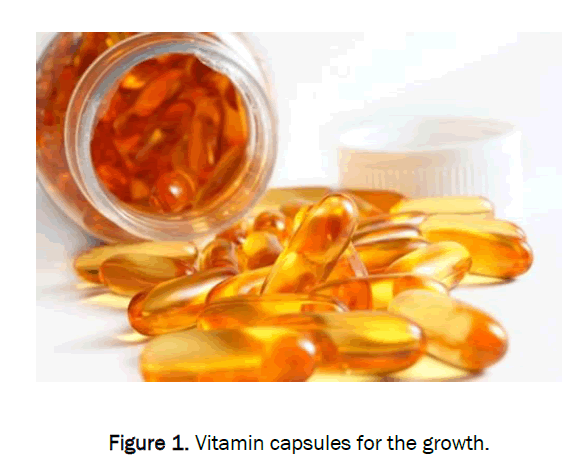
Vitamin D is a hormone antecedent that is available in 2 forms. Ergocalciferol, or vitamin D2, is available in plants and some fish [6-10]. Cholecalciferol, or vitamin D3, is blended in the skin by daylight. People can satisfy their vitamin D prerequisites by either ingesting vitamin D or being exposed to the sun for enough time to deliver sufficient amounts (Figure 1). Vitamin D controls calcium assimilation in the small intestine and works with parathyroid hormone to mediate skeletal mineralization and keep up calcium homeostasis in the circulatory system [11].
Figure 1: Vitamin capsules for the growth.
Synthesis Of Vitamin D
Vitamin D is manufactured in the skin after the absorption of sunlight. It is ingested through food and supplements, absorbed by the intestines and carried to the liver via bloodstream [12-15]. Once in the liver, vitamin D turns into 25(OH)D (Calcidiol), the primary form of circulating vitamin D.
Sources
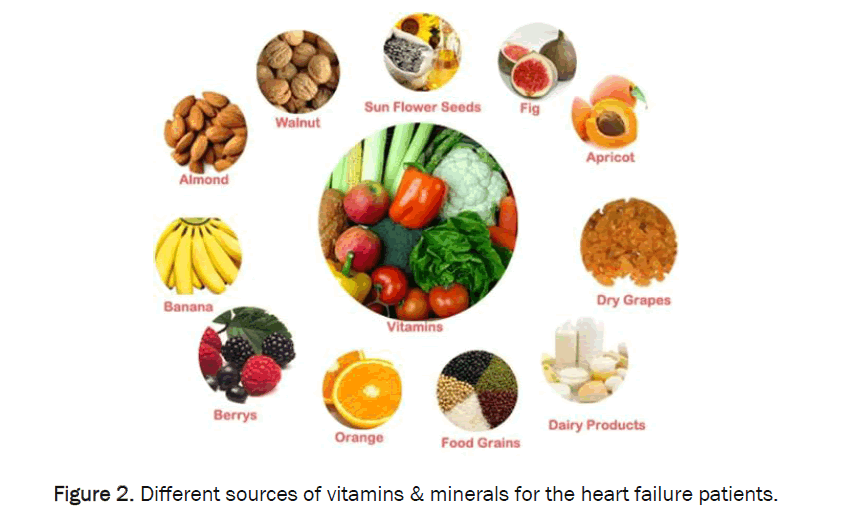
Vitamin D is produced when the skin is exposed to sunshine. It also comes from oily fish, eggs and is added to many so-called fortified foods such as breakfast cereals and milk [16-18]. Many people are deficient in Vitamin D (vitamin D deficiency), often because they do not get enough exposure to sunlight during the day (Figure 2). The skin's ability to manufacture vitamin D also gets less effective with age. Vitamin D supplements may help people with diseased hearts [19-22].
Figure 2: Different sources of vitamins & minerals for the heart failure patients.
Significance Of Vitamin D
Vitamin D prevents heart failure and the synthesis of vitamin D facilitates calcium absorption from the small intestine, calcium reabsorption from the kidneys and the rebuilding of bone tissue. It is important for healthy bones and teeth and is also believed to improve the hearts' ability to pump blood around the body [23-26].
How Vitamin D works?
Vitamin D acts as a hormone, regulating more than 200 genes throughout the body and keeps abnormal cells from multiplying in breast and colon tissues [27]. It also helps in regulating blood pressure in the kidney and blood sugar levels in the pancreas [28-32].
Health benefits of Vitamin D
Vitamin D helps in regulating the absorption of calcium and phosphorous [33-36]. These nutrients are needed to keep bones, teeth and muscles healthy. A lack of vitamin D can lead to bone deformities such as rickets in children, and bone pain and tenderness as a result of a condition called osteomalacia in adults [37-42]. It is also important for normal growth and development of bones and teeth, as well as improved resistance against certain diseases [43-45]. Because vitamin D is involved in regulating the levels of minerals such as phosphorous and calcium, it is used for conditions caused by low levels of phosphorous (familial hypophosphatemia and Fanconi syndrome) and low levels of calcium [46-49].
Low levels of vitamin D leads to higher risk for cardiovascular disease
Vitamin D may lower the risk of congestive heart failure because it reduces the risk of diseases that may lead to high blood pleasure, diabetes and coronary heart disease [50-54]. It also strengthens the heart muscle and reduces inflammation.
What causes vitamin D deficiency? Who does it affect most?
When the skin is exposed to sun, body itself produces vitamin D [55]. As people are spending less time outside and also using sunscreen there is a general deficiency [56-58].
Factors to lower vitamin D levels
• Women have lower vitamin D levels as they spend most of the time indoor and also applying sunscreens while coming outdoors and tend to wear hats and sunscreen more often than men [59,60].
• Age also plays a role in vitamin D deficiency, because as people get older they absorb less vitamin D from their diet and produce less vitamin D in their skin. Also, their reduced activity gives them less opportunity to be outdoors.
• Obesity is an important factor because fat cells absorb vitamin D and keep it from circulating throughout the bloodstream.
Conclusion
Taking vitamin D supplements may improve cardiac function in chronic heart failure patients. Vitamin D3 can be boosted by exposure to sunlight, but heart failure patients are often deficient in it even during the summer because older people make less vitamin D3 in response to sunlight than younger people.
References
- Aagha AE, et al. Clinical Presentations of Vitamin D Deficiency in Children at King Abdul-Aziz University Hospital, Jeddah, Saudi Arabia: A Cross-Sectional Survey. Gen Med (Los Angeles) 2016;4:251.
- Nassar K, et al. Vitamin D and Pre-eclampsia. Gynecol Obstet (Sunnyvale) 2016;6:389.
- Kargi AB et al. Vitamin D Deficiency as a Risk Factor in Non-Squamous Lung Cancer Subgroups - A Preliminary Study. J Clin Respir Dis Care. 2016;2:113.
- Singh D. Vitamin D Status in Pregnant Women of Udaipur. Biochem Anal Biochem. 2016;5:280.
- Kisters K et al. Magnesium Metabolism, Vitamin D and Interleukins in Cardiovascular Disease. Metabolomics 2016;6:177.
- Berezin AE et al. Non-Classical Progenitor Mononuclears in Metabolic Syndrome: The Role of Serum 25-Hydroxyvitamin D3. Clin Med Biochemistry Open Access. 2016;2:115.
- Elmoneim AA et al. Vitamin D Level in Pediatric Intensive Care Unit (PICU) Patients: Its Relation to Severity of Illness. Pediat Therapeut 2016;6:293.
- Kar SK et al. Association Between Churg Strauss Syndrome and Vitamin D Deficiency: A Myth or Truth? A Rare Case Report. J Anesth Clin Res 2016;7:625.
- Rojekar MV and Rojekar AA. Vitamin D and Spectrum of Its Roles. J Nutr Food Sci 2016;6:509.
- Fasih Z. Evaluating the Frequency of Vitamin D Deficiency in the Pediatric Age Group and Identifying the Biochemical Predictors Associated with Vitamin D Deficiency. Pediat Therapeut 2016;6:289.
- Al-Agha AE et al. Awareness of Vitamin D and its Deficiency in Jeddah Population, Saudi Arabia. J Comm Pub Health Nurs 2016;2:120.
- Luque de Castro MD. Could Metabolomics Clarify the Multiple Sclerosis–Vitamin D Metabolites Relationship? J Mult Scler (Foster City) 2016;3:1710.
- Shendi F et al. Prevalence of Vitamin D Deficiency in Obstructive Sleep Apnea Disorder in Dubai, UAE. J Clin Respir Dis Care 2016;2:112.
- Naveed S et al. Survey on Prevalence of Vitamin D as Well as Calcium Deficiency Plus Awareness about Osteopenia and Osteoporosis in Females. J Bioequiv Availab 2016;8:175-178.
- Kawano PR et al. Effect of Dietary Supplementation of Vitamin D on Ethylene Glycol-Induced Nephrolithiasis in Rats. J Nutr Food Sci 2016;6:499.
- Burlaka I. Beyond Proteinuria: Apoptosis and Vitamin D3 State in Children with Diabetic Nephropathy. J Clin Exp Pathol 2016;6:266.
- Al Hariri A. Vitamin D Deficiency and Insufficiency and their Role in Growing Levels of Depression and Anxiety in Saudi Arabia. J Psychiatry 2016;19:360.
- Sonia HL et al. Serum Vitamin D Level in Children with and without Type 1 Diabetes Mellitus. J Diabetes Metab 2016;7:655.
- Alnoshan AA et al. Effect of Narrowband Ultraviolet B Therapy on Serum Vitamin D in Saudi Patients with Vitiligo. J Pharmacovigilance 2016;4:198.
- Finkel J et al. Adequate Vitamin D3 Supplementation during Pregnancy: Decreasing the Prevalence of Asthma and Food Allergies. Matern Pediatr Nutr 2015;1:105.
- Alani A et al. Association of Vitamin D Level and Subclinical Coronary Artery Disease. J Nutr Disorders Ther 2016;6:181.
- Hassan MM et al. Vitamin D Status in Egyptian Children and Adolescents with Type 1 Diabetes Mellitus. J Diabetes Metab 2016;7:636.
- Tshiband A et al. Solid-phase Immuno Radio Metric Assay (IRMA) of 25-hydroxy Vitamin D and Displacement from Serum Binding Proteins for Resource-limited Settings. J Biomed Eng Med Devic 2015;1:102.
- Nowak R. Transcriptional Activity of Vitamin D Receptor Gene (VDR) and Transforming Growth Factor Beta (TGF-Β) Signaling Differentiate Juvenile and Adolescent Idiopathic Scoliosis. Transcriptomics 2015;3:118.
- Ozbakir HF et al. Detection of 25-Hydroxyvitamin D3 with an Enzyme modified Electrode. J Biosens Bioelectron 2016;7:193.
- Mann MC. Vitamin D Deficiency and Cardiovascular Risk: we’re still in the Dark. J Nutr Food Sci 2015;5:418.
- Liu J et al. Evaluation of Vitamin D level and Fatigue in Acute Leukemia Patients Undergoing Chemotherapy. J Leuk 2015;3:194.
- Madhu Jain et al. Preeclampsia Rates are Elevated during Winter Month when Sunlight Dependent Vitamin D Production is reduced. J Nutr Food Sci 2015;S5:003.
- Dziedzic E and Dabrowski MJ. Is Vitamin D a New Therapeutic Option in Coronary Artery Disease? Overview Data. Cardiol Pharmacol 2015;S1:003.
- Bazrafshan A. Recurrent Falls in the Elderly Iranian Population: Does the 25-hydroxyvitamin D Level Matter? J Neuroinfect Dis 2015;S2:004.
- Liu PT et al. Toll-like receptor triggering of a vitamin D-mediated human antimicrobial response. Science. 2006;311(5768):1770-1773.
- Holick MF et al. Evaluation, treatment, and prevention of vitamin D deficiency: an Endocrine Society clinical practice guideline. The Journal of Clinical Endocrinology & Metabolism. 2011;96:1911-1930.
- Wang TJ et al. Vitamin D deficiency and risk of cardiovascular disease. Circulation. 2008;117:503-511.
- Lappe JM et al. Vitamin D and calcium supplementation reduces cancer risk: results of a randomized trial. The American journal of clinical nutrition. 2007;85:1586-91.
- Morrison NA et al. Prediction of bone density from vitamin D receptor alleles. Nature. 1994;367(6460):284-287.
- Trivedi DP et al. Effect of four monthly oral vitamin D3 (cholecalciferol) supplementation on fractures and mortality in men and women living in the community: randomised double blind controlled trial. Bmj. 2003;326:469.
- Jackson RD et al. Calcium plus vitamin D supplementation and the risk of fractures. New England Journal of Medicine. 2006;354:669-83.
- Tang BM et al. Use of calcium or calcium in combination with vitamin D supplementation to prevent fractures and bone loss in people aged 50 years and older: a meta-analysis. The Lancet. 2007;370(9588):657-666.
- Bischoff-Ferrari HA et al. Fall prevention with supplemental and active forms of vitamin D: a meta-analysis of randomised controlled trials. Bmj. 2009;339:b3692.
- Baker AR et al. Cloning and expression of full-length cDNA encoding human vitamin D receptor. Proceedings of the National Academy of Sciences. 1988;85:3294-3298.
- Levin A et al. Prevalence of abnormal serum vitamin D, PTH, calcium, and phosphorus in patients with chronic kidney disease: results of the study to evaluate early kidney disease. Kidney international. 2007;71:31-38.
- Vijayan A et al. Relationship of 1,25 dihydroxy Vitamin D Levels to Clinical Outcomes in Critically Ill Patients with Acute Kidney Injury. J Nephrol Ther 2015;5:190.
- Jain M et al. Maternal Vitamin D Deficiency: A Risk Factor for Gestational Diabetes Mellitus in North India. Gynecol Obstet (Sunnyvale) 2015;5:264.
- Ralls VA, Boyer AP and Wilkins CH. Vitamin D in Aging and Chronic Illness. Vitam Miner 2014;3:125.
- Hendrik HD and Raubenheimer EJ. Vitamin D Nuclear Receptor and Periodontal Disease: A Review. J Interdiscipl Med Dent Sci 2014;3:157.
- Garland CF et al. The role of vitamin D in cancer prevention. American journal of public health. 2006;96:252-261.
- Sanders KM et al. Annual high-dose oral vitamin D and falls and fractures in older women: a randomized controlled trial. Jama. 2010;303:1815-1822.
- Wortsman J et al. Decreased bioavailability of vitamin D in obesity. The American journal of clinical nutrition. 2000;72:690-693.
- Wilkinson RJ et al. Influence of vitamin D deficiency and vitamin D receptor polymorphisms on tuberculosis among Gujarati Asians in west London: a case-control study. The Lancet. 2000;355(9204):618-621.
- Ross AC et al. The 2011 report on dietary reference intakes for calcium and vitamin D from the Institute of Medicine: what clinicians need to know. The Journal of Clinical Endocrinology & Metabolism. 2011;96:53-58.
- Makishima M et al. Vitamin D receptor as an intestinal bile acid sensor. Science. 2002;296(5571):1313-1316.
- Holick MF et al. Vitamin D2 is as effective as vitamin D3 in maintaining circulating concentrations of 25-hydroxyvitamin D. The Journal of Clinical Endocrinology & Metabolism. 2008;93:677-681.
- Wang TJ et al. Common genetic determinants of vitamin D insufficiency: a genome-wide association study. The Lancet. 2010;376(9736):180-188.
- Nykjaer A et al. An endocytic pathway essential for renal uptake and activation of the steroid 25-(OH) vitamin D 3. Cell. 1999;96:507-515.
- Dawson-Hughes B et al. Estimates of optimal vitamin D status. Osteoporosis international. 2005;16:713-6.
- Deeb KK et al. Vitamin D signalling pathways in cancer: potential for anticancer therapeutics. Nature Reviews Cancer. 2007;7:684-700.
- Provvedini DM et al. 1, 25-dihydroxyvitamin D3 receptors in human leukocytes. Science. 1983;221(4616):1181-1183.
- Lips P et al. Vitamin D supplementation and fracture incidence in elderly persons: a randomized, placebo-controlled clinical trial. Annals of Internal Medicine. 1996;124:400-406.
- Bischoff-Ferrari HA et al. Prevention of nonvertebral fractures with oral vitamin D and dose dependency: a meta-analysis of randomized controlled trials. Archives of internal medicine. 2009;169:551-561.
- Pfeifer M et al. Effects of a short‐term vitamin D and calcium supplementation on body sway and secondary hyperparathyroidism in elderly women. Journal of Bone and Mineral Research. 2000;15:1113-1118.

 Menu
Menu
 555-666-0606