
Journal of Global Research in Computer Sciences
 Menu
MenuISSN: 2229-371X
ISSN: 2229-371X
Tashkinov Aleksey*
Department of Economics and Management of Industrial Production, Perm National Research Polytechnic University, Perm, Russia
Received: 30-Aug-2024, Manuscript No. GRCS-24-146861; Editor assigned: 03-Sep-2024, Pre QC No. GRCS-24-146861 (PQ); Reviewed: 17-Sep-2024, QC No. GRCS-24-146861; Revised: 12-Sep-2025, Manuscript No. GRCS-24-146861 (R); Published: 19-Sep-2025, DOI: 10.4172/2229- 371X.16.3.001
Citation: Aleksey T. Formation of a Digital Transformation Strategy for an Industrial Enterprise Based on the Implementation a Roadmap. RRJ Glob Res Comput Sci. 2025;16:001.
Copyright: © 2025 Aleksey T. This is an open-access article distributed under the terms of the Creative Commons Attribution License, which permits unrestricted use, distribution and reproduction in any medium, provided the original author and source are credited.
Visit for more related articles at Journal of Global Research in Computer Sciences
The relevance of the study is determined by the fact that the digital transformation of the enterprise becomes the cornerstone of the organization's success: Enterprises use digital technologies to optimize production processes, and logistics operations; improve product quality, and customer service; and develop digital innovation. Flexible methodologies have become widespread as organizations seek to respond quickly to market demands, adapt to changing demands, and deliver high-quality products and services efficiently. By driving collaboration, iterative development, and customer focus, flexible practices enable organizations to accelerate market entry and achieve greater flexibility in their operations. Active, lean, digital manufacturing practices extend beyond industry, enabling organizations to optimize resources, minimize inefficiency, and develop a digital culture of continuous improvement. At its core, digital transformation involves the use of digital technologies to fundamentally change the business processes of the enterprise and ensure its value to customers. This includes a wide range of digital initiatives, and digital transformation projects from digitizing existing processes and systems to introducing new technologies such as artificial intelligence, cloud computing and the industrial Internet of Things.
Industrial enterprise; Digital transformation strategy; Digital transformation; Digital technologies; Roadmap
Global trends such as the emergence of disruptive technologies, digitalization and accelerated product life cycles are driving massive changes in most areas of activity. The distribution channels are changing, profitability zones are shifting, and new players appear on the market. All these fundamentally change the balance of power in industries, significantly accelerating the introduction of new business models. Involvement in universal digitalization leads to changes in all spheres of activity. Many new companies have appeared, while leaders are those enterprises whose organizational and economic ties take into account the requirements of digital trends [1-3].
Digital transformation is often considered a new epoch that dramatically changes how organizations develop, compete, and create value [4]. Indeed, digital transformation not only strongly affects how people work [5] and how organizations innovate, but also emphasizes how all partners need to apply digital transformation at all levels and processes in supply chain management [6]. For example, supply chain operation need to make process and organizational changes with the implementation of technology [7,8].
Digital transformation is discussed by company executives, politicians and scientists. Some call this the fourth industrial revolution, whereas others offer a combined approach when considering a digital transformation strategy.
Owing to its crushing power, digital transformation has fallen into the focus of the business world. It is spoken about at CEO meetings, industry conferences, and annual reports. Recently, the Economist Intelligence Unit reported that the topic of digital transformation is at the top of the agenda at board meetings with 40% of CEOs. However, leaders interpret this concept in different ways. Leaders focused on digital transformation understand that their companies will have to change for survival. In addition, they are proactive in this process.
Existing reviews of the digital transformation literature on industrial enterprises, as well as the digital transformation strategy itself, highlight the significance of organizational change and restructuring under the influence of technological progression. However, despite the importance of this topic, academic research still lacks a sound understanding of how advances in digital technology contribute to reorganization and changes in the production and economic system of enterprise management.
The development of scientific theories in the socioeconomic sphere and the dynamism of economic ties in the era of the formation of the digital economy led to the need to study the theory and practice of the digital transformation of an enterprise.
According to business process management theory, unreasonable design and integration lead to duplication and waste in strategy implementation. Business process management involves developing a strategy using technical solutions and regulating the organizational structure and the work of the organization’s personnel. In this context, business process management and organizational dysfunction may jointly explain the mismatch between the design and planning process of digital transformation within an organization.
Thus, this study aims to understand the gaps in enterprise digital transformation planning processes, thereby ensuring a more effective integration of digital transformation processes and enterprise strategic planning.
Therefore, this article focuses on answering the following two research questions:
RQ1: What is the most suitable digital business model for digital transformation?
RQ2: How can enterprises integrate their digital transformation strategy more effectively as they implement their roadmap?
The purpose of the article is to substantiate the feasibility and scientific correctness of using the strategy for the digital transformation of an industrial enterprise concept as an object of economic and management research.
To achieve this goal, it is necessary to solve the tasks as following tasks:
• To form the author's definition of "digital transformation of an industrial enterprise" from the point of view of the development of the digital economy of transformation of the internal environment, enterprise management.
• Describe the characteristics of the main elements of the digital transformation of the industrial enterprise.
• Present the methodology and describe business models based on adaptation to the challenges of digital transformation: Show intermediate results.
• Justify the possibility of digital transformation of an industrial enterprise.
• Present the stages of the development of a strategy for the digital transformation of an industrial enterprise, and describe the main stages of the implementation of the roadmap.
• Offer practical recommendations for the implementation of the strategy of digital transformation of an industrial enterprise.
Theoretical background
An analysis of the literature has shown that scientists both abroad and in Russia are engaged in solving the issues of the digital transformation of enterprises and the strategy itself.
However, despite the research conducted on the digital transformation of an industrial enterprise, there are unresolved issues–these are the enterprises themselves, and their readiness to carry out digital transformation. If digital technologies are already available in Russia, then there are problems with the development of strategy, business models and organizational opportunity. Moreover, the absence of at least one component makes digital transformation of the enterprise impossible.
Systematization and generalization of existing views in theory and practice on the essence and content of the digital transformation of an enterprise.
Next, let us move on to systematizing the concept of the "digital transformation of an industrial enterprise."
Currently, this concept of the digital transformation of an industrial enterprise is being considered by various scientists and experts in the field.
Currently, there is no single understanding of the digital transformation of an industrial enterprise. The term "digital transformation of the enterprise" can be applied not only to the enterprise but also to the industry, the state, etc.
Therefore, according to the authors, TGileva TA, Babkin AV, and Gilev GA, the strategy for the development of a modern enterprise, which essentially becomes a strategy for digital transformation, should takeconsider the changes associated with the spread of business ecosystems and use them to strengthen their competitive advantages [9].
Therefore, the team of scientists Babkin AV, Burkaltseva DD, Kosten DG, Vorobyov Yu N consider the term "digital transformation" refers to a type of economy that is based on the practical use of new digital technologies for collecting, storing, processing, and transmitting information, this type of economy involves a complex system of socioeconomic and organizational and technical relations, including many elements.
Furthermore, according to the team of authors of the textbook "Digital Management", Yu.V. Lyandau, V.V. Maslennikova, I.A. Kalinina, E.V. Popova, and E.S. Biryukova, this definition of "digital transformation of the enterprise" is investigated from the standpoint of the organizational structure of the enterprise. In their opinion, this definition has a fundamental difference, which consists of the transition of the hierarchical structure into the digital organizational structure of management and consists of the end-to-end use of digital technologies to ensure the effective interaction of the subject and the object of management, ranging from production personnel and line managers to the board of directors in the company or the management of the ecosystem as a whole. In general, they propose considering economic activities carried out in a single information space based on digital technologies that combine all the necessary resources for a software-controlled life cycle of creating values (goods, works, services) via digital twins, internet things, big data analysis, and blockchain technologies. Digital organizational management structures do not completely cancel the hierarchy but radically change the principles and work of their participants, who are connected to the digital platform.
Therefore, M.B. Fleck, E.A. Ugnich proposed considering the term "digital transformation of the enterprise" on the basis of process, industry and technological approaches.
In our opinion, from the point of view of organizational structure management, the process approach to management during the digital transformation of the enterprise is fundamental, because it is based on the allocation of business processes of related works or procedures that together implement a specific goal of the current economic activity within the framework of the existing organizational structure of the industrial enterprise.
According to E.Yu. Sidorova, the "digital transformation of the enterprise" should include the main elements that make it possible to successfully implement projects to optimize business processes and digital transformation. The author proposes to first determine the goals of digital transformation, the object and subject, strategy and path, develop a "roadmap, "determine barriers, and rationally approach the implementation of the digital transformation strategy and roadmap.
According to N.S. Zinchik, O.V. Kadyrova, Yu.I. Rostova, the "digital transformation of the enterprise", should consider lean production projects aimed at optimizing business processes via digital technologies that combine work with processes and people.
Therefore, the authors: Yu. V. Zabaykin, Yu. S. Kapitonova, and M.F. Kharlamov offered their own view of this term. In their opinion, "the digital transformation of the enterprise is a complex process of transformation based on the use of digital technologies, it involves a fundamental rethinking of how the organization works and how it interacts with the environment”. Note that the above authors propose distinguishing between the concept of "digital transformation of an enterprise" and "digitalization of an enterprise," which is most often identified, and by digitalization in the future to understand the socioeconomics process of preliminary digital transformation and forms its basis, the essence of which is to restructure and transform communication channels around the digital technologies used (settings of the so-called digital interaction). The team of foreign authors, including Germán Frank, Lucas Santos Dalenogare, and Nestor Fabian Ayala, propose considering the "digital transformation of the enterprise" as a concept of smart production, which involves integrating the life cycle of the product with all the activities of the supply chain plant,- and production processes with a mandatory change in the way people work.
Considering the internal environment of an enterprise, let us focus on understanding Digital Transformation (DT) in relation to the enterprise. However, even in this case, digital transformation can be viewed from different positions and, accordingly, give it different meanings. Thus, engineers and developers see in digital transformation the technologies on which the production process is based, - business consultants believe that the center of digital transformation is not technology, but rather a rethink of the company's strategy. HR professionals see the challenge of digital transformation in recruiting with a new mindset and understanding of the digital business.
Notably, the process of digital transformation covered most of the world, but the very concept and data on the quantitative indicators of the digital economy remain limited, as indicated by the English researchers Bukht R. and Hicks R. Since the object of our research is an industrial enterprise, the author is invited to consider the concept of "digital transformation of the enterprise" from the point of view of the development of the digital economy of the internal environment, i.e., enterprise management. In the process of creating an internal environment, the management of the enterprise has an impact on the main production processes during the production of products, and auxiliary and service processes that produce and sell products.
At the present stage, the enterprise activity is impossible without the organization of information unity, which is determined by the commonality of information flows supporting the processes of production and financial and economic management. As a rule, the structure of an industrial enterprise is the composition and ratio of subsystems included in it, allocated according to the criteria of organizational, production and management processes.
Accordingly, the organizational structure of production and management can be distinguished. The first includes functional units such as main workshops, design production areas, design bureaus, and chemical laboratories. The second includes services, departments and other divisions of the control apparatus, the relationships between which are maintained due to functional connections, which are usually divided into horizontal and vertical connections. The structural units here include The Organizational and Administrative Department, The Planning and Economic Department, The Production and Dispatch Department, The Coordination and Methodological Center for the implementation of the digital economy, information technology management, The Technical Development Department, The Financial Department, The Main Accounting Department, The Personnel and Technical Training Department, etc. The structure of the enterprise is established on the basis of the volume and content of the tasks it solves, the orientation and intensity, the existing information and documentation flows, taking into account its organizational and material capabilities. Of course, the conditions for the formation of a digital economy and the solution to the task of increasing efficiency under these conditions cannot affect but affect the structure of the enterprise. These conditions fundamentally indicate new general metodological approaches for enterprises when preparing production and mastering new high-tech products when using information technologies with personnel involvement.
It follows that an enterprise, when it realizes that there is a need for the transition of digital transformation, then its organizational structure and all the connections of functional units begin to be rebuilt under the new requirements of the external and internal environment, and, hence, the inevitability of the transformation process, i.e., established thinking, into its updated "digital thinking."
For established businesses, this requires a shift from product thinking to software thinking. Traditionally, enterprises think linearly with a clear start and end to product development. On the other hand, software development and management are continuous and constantly evolving, adding new functionality and making changes in response to customer, business, and market demands. This allows you to react more quickly to the speed and scale of changing consumer expectations. Digital transformation is akin to permanent change, a voluntary regime that recognizes transformation not as a one-time effort but as an ongoing commitment to adapt to changing customer needs and changing industry demands.
Digital thinking refers to a set of attitudes, beliefs and behaviors that allow people to understand the opportunities and risks associated with digital technologies and apply such technologies in their daily lives.
It follows that in order to move from product thinking to software thinking, businesses must use digital thinking as a strategic opportunity to invest and make a profit.
According to A.I. Borovkov, the digital industry overcomes many restrictions, and increases productivity, quality and safety. However, this requires significant investment and an increase in the level of competence of engineering personnel with new thinking technology, who are able to avoid problems at the initial stage. At the same time, practice shows that not all companies in Russia are yet ready for digitalization.
The structure of the industrial enterprise itself is changed within the following functional units:
• Process unit-creation of unified automated product life cycle management systems, process control systems of flexible production systems, divided into modules of process chains, production areas, etc.
• Transfer to a single digital space of departments of design, technical documentation, technological preparation of production, standardization, information, etc.
• Financial and economic unit-bringing to a uniform system of accounting, management accounting, accounting and provision of stock rationing: Transfer to a single digital space of activities of departments (departments): Planning and economic, financial, accounting, and chancellery
• Digital economy unit-creation and technical support of a single information space of production design and technological preparation systems and support of the product life cycle in order to reduce production time and improve product quality.
• Ensuring the introduction of new types of software in the automated design of technological processes, the compatibility of technologies developed in electronic form and the expansion of the methods used for all types of production.
• Introduction of new business processes and digitalization of existing business processes of the enterprise in a single information space.
• Support of directions for development of the production system through methodological support.
• Implementation of the system for submitting and implementing kaizen proposals for improvements.
• Coordination of work, monitoring of the implementation of key performance indicators.
• Application of lean manufacturing methodology to improve the efficiency of IT services.
Transformability is a decisive factor in success in modern production. Only enterprises that can quickly adapt their structure and have operational processes for planning and implementing changes can successfully develop and compete in the context of increasing market dynamics [10].
In summary, the key changes in the various management elements of an industrial enterprise, due to the formation of the digital economy, are presented in Table 1.
| Enterprise controls | Key features of the digital economy |
| Organizational structure of the enterprise |
|
| Organizational and technical characteristics of the enterprise |
|
| Unused resources, reserves |
|
Table 1. Elements of industrial enterprise management determined by the emergence of the digital economy and the transition of enterprises to digital transformation.
The abovementioned elements of industrial enterprise management and key features increase opportunities for improving the efficiency of industrial enterprises, which leads to large-scale changes in the work of structural units in the context of the digital transformation of enterprises.
Considering this provision, let us move on to describing the main elements that reveal the content of the digital transformation of an industrial enterprise.
The main elements that reveal the content of the digital transformation of an industrial enterprise are the goal, object, subject and approaches to its implementation. Table 2 describes the main elements of the enterprise's digital transformation.
| Main elements | Contents |
| Purpose | Efficient development of the production and economic system based on digital technologies with personnel involvement. |
| Object | Enterprise that realigns and transforms the concept by translating the system into a digital space. |
| Subject | Unity of processes of introduction of transforming digital technologies, organization of interaction of all participants of digital transformation processes |
| Campaigns for implementation | System, process, design. |
Table 2. Characteristics of the main elements digital transformation of an industrial enterprise.
Considering the Table 2, we define enterprise management from the point of view of enterprise management in the process of digital transformation.
The digital transformation of an industrial enterprise is a qualitative improvement in production and business processes by introducing modern concepts of enterprise management, as well as adapting existing and customized business models in the modern digital economy, which allows one to change the established thinking, and make its transition to the updated "digital thinking" of personnel and transform the culture of the organization.
On this basis, the digital transformation of an industrial enterprise affects not new technologies, but rather the transformation of "digital thinking" and culture in the organization to a greater extent. In this case, from the point of view of digital transformation, organizational culture becomes significant and important.
Companies embarking on DT should assess and reconsider their corporate culture from the beginning [11,12], thus, companies often spend considerable effort on transforming the business culture into digital culture.
The advancement of information technologies has led to a number of qualitative changes in public relations, which have stimulated the development of informal ties between various participants in the business environment and also significantly transformed relationships among the companies themselves, their corporate environment and their culture [13,14].
This is typically characterized by a high level of creativity, equality, flexibility, openness, willingness to learn and digital savviness [15,16] . It stimulates innovation, and the use of digital technologies, and is the key to achieving the necessary agility [17]. This is crucial because one of the main causes of poor DT performance is the lack of the right culture that embraces digitalization [18,19].
Notably, this term is a very important feature. The digital transformation of the enterprise is based on the introduction and application of digital technologies, which is an additional competitive advantage, since the digital transformation of the enterprise is carried out precisely through digital technologies with the involvement of personnel.
If determined canonically, then the digital transformation of an enterprise is the transformation of the productioneconomic system of enterprise management by revising the strategy, models, operations, products, project approach and goals through the introduction, development and implementation of digital innovations. It is designed to accelerate production and labor productivity growth.
Thus, the digital transformation of an industrial enterprise involves the development of standardized works/services on the basis of the digitization and digital modernization of existing business processes. This allows enterprises to expand their competitive advantages, promote joint and open innovation, and improve the effectiveness of digital transformation projects. Using accumulated data, the digital transformation of enterprises has led to a shift in the paradigm of innovation, the emergence of competitive advantages and the strengthening of independent innovative opportunities. Owing to digital technologies such as big data, the internet and artificial intelligence, enterprises can quickly and comprehensively receive important information such as market demand, technological advances and new opportunities for the effective development of the production-economic system.
To answer the questions presented, the study used a qualitative research design. A multiple case study involving a Russian industrial enterprise was conducted. Data on (1) The daily activities of entrepreneurs, (2) The role of digital technologies in the context of these activities, and (3) The evolution of the influence of digital technologies on the daily activities of entrepreneurs over the past three years were collected through interviews and documentary sources.
The research methodology represents the process of understanding from the study of technologies and basic principles of digital transformation to the development and justification of a digital business model on the basis of the types of organizational configuration of enterprises participating in the production system as a way to increase the efficiency of enterprises in modern market conditions. The study used a systematic review of 55 articles drawn from three global databases: Web of Science, Google Scholar and Scopus. The analysis includes two stages. First, the narrative account examines systems research, digital and entrepreneurial systems, and related categories present in the research logic of the research. Second, we embark on a case study based on the thematic categorization of enterprise research, which is part of the system.
In the first stage, we reviewed the relevant literature and analysed case studies of the surveyed enterprises. To ensure that the case studies were consistent with our research focus, we selected enterprises that are involved in digital transformation projects or use digital business models on the basis of organizational design or those related to them, regardless of industry. To identify the demand for systems, which is the core of the modern manifestation of customeroriented business based on digitalization, expanding the potential of enterprises, we conducted a market study in the form of a survey, in which representatives of enterprises from various industries and fields of activity took part. We believe that we have obtained satisfactory results, which indicates that businesses are interested in implementing such systems. Thus, the responses to the survey questions are analyse, and digital platforms, along with their applications and services, are used to solve everyday problems. The results of the survey and meetings with company representatives were useful in creating preliminary versions of the digital business model and drafting subsequent interviews.
As we found out, digital platforms play a key role in the implementation of IIoT. Digital platforms combine the capabilities of the Industry 4.0 digital revolution and provide fundamental new opportunities to improve production efficiency. New business models are created on the basis of platforms [20].
For mechanical engineering enterprises, there is a need for digital platforms with advanced functionality that allow the developer, manufacturer and customer to interact throughout the product life cycle are needed Moreover, security on the internet is an important condition.
Digital platform capabilities
1. A unified data management environment to optimize production based on artificial intelligence.
2. IT production costs and transaction costs are reduced.
3. Sources of additional profit and business diversification opportunities through the implementation of an open innovation strategy.
Let us take a closer look at these three groups of digital platform capabilities.
First, the platforms act as the basis for managing new types of assets with production data. Therefore, platforms are essentially a single environment for managing data collection, storage, processing and presentation.
In this area, digital platforms implement the following set of tasks.
The first block of capabilities is a single management environment.
1. Real-time data collection and advanced data-driven analytics.
2. The platforms implement the management of the installed IIoT and provide so-called cognitive capabilities with all types of devices and the implementation of digital IIoT scenarios.
3. Reliable production analytics are formed in any section with uniform rules for all departments.
4. Data accumulation. The core of the platform is single structured storage and unstructured data from various systems, processes and redistributions.
5. Platforms also act as a factor in the democratization of data work. Platforms with other built-in tools make it possible to work with data for any employee, and not just an IT specialist. This fundamentally changes the effectiveness of digitalization, because each employee can become a developer of innovative digital solutions.
6. On the platform, a digital twin of a production asset is created and developed as a key tool for optimizing production processes.
7. Structured data use an object model and built-in business intelligence tools to search for information in a disparate corporate system.
The second block of capabilities aims to reduce production costs and transaction costs.
1. By centralizing information systems on a single digital platform and using microservice architecture, costs are reduced. 2. The platforms provide the opportunity to combine the solutions of various suppliers and attract technical teams from the market to develop physical applications for the platforms. 3. The object model and partial out-of-the-box algorithm tools for accelerating the development and deployment of business applications reduce the development time of digital solutions by 5–10 times. 4. The platform also implements an app store. On the basis of the Android model, the Apple Store, the user can quickly connect business applications that are tedious to him.
The third block of opportunities is the creation of new sources of profit.
1. Making a profit through commercialization of internal developments, R and D, and development of software according to the be @ be model. 2. Provide platforms to external teams. 3. A new platform business based on a digital twin–can be created on the basis of digital twin–a production asset. For example, the business of advanced analytics of industrial equipment, services, repairs, and laboratory research.
To make the enterprise transition to digital transformation, we analysed the data on the cases of the respondents’ enterprises. The case study method refers to the technology of situational analysis, which is one of the most suitable approaches for answering the questions formulated in the study and identifying the dynamics of development of the functionality of enterprises within the production system. The specificity of this technology is that it is carried out in the form of a situational analysis of how enterprises react to certain conditions, but this is only possible through interaction with participants in the process, consideration of different points of view and approaches, and argumentation for our own position.
Primary data were collected by interviewing representatives of individual enterprises, and by collecting information from open sources. Interview scripts were prepared to facilitate data collection; together with the available information, a description of real economic situations was obtained, which allows us to understand the essence of the subject of the study, propose possible classification features of enterprises within the framework of digital transformation, and help choose the most suitable digital business model.
The choice of an enterprise is a critical element of this study since enterprises must make a significant contribution to the economy, which should be interesting and competitive in the market and use digital technologies in their activities.
Next, we present the types of organizational configurations that an enterprise participant can have or adopt in order to take advantage of different business models. Organization configuration types are discussed in detail in and are based on an extension of the typology of digital business innovation. Thus, the adoption of a specific digital transformation strategy roadmap may result in enterprises following different trajectories and having a specific attitude toward digital business innovation, focused on either execution or differentiation, and all hybrid configurations between them. However, to better identify changes in structure and take advantage of different business models, an additional set of dimensions needs to be considered regarding the stability and consistency of response patterns.
Thus, for each of the business entities under consideration, the combination of the digital transformation strategy of the roadmap and response models (characterizing their degree of stability and consistency) allows us to identify four types of digital model organization configurations. Four–types are based on adaptation to the challenges of digital transformation of the classical typology (consisting of defenders, prospectors, analysers and reactors). However, it is worth noting that the description of the characteristics of the types retains the main facets of the original typology.
Therefore, we summarize them as follows:
• A digital business defender is an organization that strives to be competitive in a narrow and well-defined market (products and services) in digital business, while focusing on the efficiency, productivity and improvement of existing operations.
• Digital business prospectors are organizations focused on the continuous differentiation and innovation of service products, and are constantly looking for new digital market opportunities, giving primary attention to experimentation.
• A digital business analyser is an organization operating in two markets, i) One stable and with a limited degree of digitalization, and ii) The other highly digitalized and evolving or being subject to change. In the first market, the organization operates as the defender does, whereas in the second market, it acts as a prospector does.
• A digital business reactor is an organization unable to respond effectively to change and uncertainty in the business environment, due to an inadequately articulated strategy or an organizational structure improperly linked to strategy or adherence to an obsolete strategy and structure.
Thus, organizations must move to one of the other three types in order to exploit a suitable digital business model to enable them to take advantage of digital business in an execution or differentiation oriented strategy. However, it should also be noted that, owing to the high variability and velocity of change driven by digital technologies, becoming a digital business reactor could also be the case for organizations that have chosen or adopted one of the three stable and consistent response types, because digital technologies have become obsolete.
The results help shed light on how a digital transformation strategy can help companies create important results. In particular, following the proposed conceptual model, one can determine the nature of the contributions to the efficiency of development of the production and economic system. In addition, the results contribute to the understanding of how these elements interact with each other in the context of digital transformation.
Stages of formation of the strategy of digital transformation of an industrial enterprise, basic provisions.
To describe the main principles related to the formation of a digital transformation strategy for an industrial enterprise, let us consider the key essence that takes into account data, technologies, business processes and the human factor.
According to the authors, V.V. Glukhova, A.V. Babkin, and E.V. Shkarupeta, the digital transformation strategy provides an idea of how a digitalization strategy can be developed and implemented at the scale of the industrial system. The digital transformation strategy does not necessarily replace any previous strategies, but must be aligned with them.
The foreign authors, Matt C., Hess T., Benlian A, and Wiesböck F., say that the digital transformation strategy seeks to provide an idea of how an organization-wide digitalization strategy can be developed and implemented. In their practical study Nigel Vaz and Faisal Hoque consider the digital business, strategy not as a replacement for the business strategy, but as an additional strategy that must be coordinated with other strategies at the business/functional level and guide the digital transformation. Compared with a digital business strategy, a digital transformation strategy is more specific because it enables nondigital organizations to reach the state of the digital business.
The authors coined the term "digital transformation strategy" to recognize that digital technology is becoming an integral part of the products, services and customer interactions of many modern firms, thereby transforming their business. Since digital transformations span many independent streams, the digital transformation strategy aims to coordinate and prioritize the actions that accompany such digital transformation.
The digital transformation strategy typically involves changes:
• In the IT infrastructure of modernizing legacy systems via digital technologies.
• Internal processes with great opportunities to reduce overhead.
• The organizational structure of the enterprise.
• Working with customers, with customers.
• Culture, people management and team integration.
On the basis of this position, the digital transformation strategy involves changing the organizational structure of the enterprise by integrating digital technologies into all relevant aspects. The goal is to achieve various goals, from improving operational efficiency and developing a culture of digital transformation, to increasing customer and customer satisfaction.
As a rule, to implement the strategy of digital transformation of the enterprise, a roadmap is used to align technological initiatives with the general directions, and goals of the enterprise, ensuring a targeted and effective transition to digital transformation.
The digital transformation strategy consists of the following main components:
• "As is" shows the position of the digital strategy at the moment.
• "How it should be" determines how this strategy will ultimately be implemented.
• The road map indicates the best way to achieve the goal through certain digital transformation projects and technological initiatives.
Given the above argument, we draw a number of conclusions.
First, the term "digital transformation strategy" refers to planned changes in business processes, in the organizational structure of an enterprise using digital technologies. In other words, this term can be considered a long-term phased plan for changing business processes, the organizational structure of the enterprise, aimed at gaining competitive advantages in the development of the digital economy.
Second, the digital transformation strategy details how the enterprise will use digital technologies to continuously create new products, services, processes and channels of interaction, as well as to reengineer existing ones to meet the constantly changing needs of customers in the context of the development of the digital economy. In the context of the development of the digital economy, enterprises are able to compete only if they use and develop a digital presence and valuable information assets. To this end, enterprises must create a digital transformation strategy that takes into account data, technologies, business processes and the human factor.
Third, the key to creating an effective digital transformation strategy is having clear goals. First, one needs to determine what the enterprise wants to achieve by digitizing its business processes. Next, it is necessary to determine what needs to be done to achieve these goals. In addition to clear, measurable and realistic goals, the enterprise needs to outline steps to create, implement and evaluate a digital transformation strategy. Moreover, it is important to develop a plan to adapt such strategies, as well as subject it to constant reassessment, given the uncertainty associated with technological initiatives and digital transformation projects.
Let us list the prerequisites for the formation of a digital transformation strategy for an industrial enterprise.
1. Synchronize digital transformation strategy goals with enterprise business goals and functional strategies.
2. Implementation of new product strategies.
3. Increase the planning horizon.
4. Changing the organizational structure of management.
5. The role of import substitution, and sanction pressure should be strengthened.
6. Synchronizing and building the enterprise's activities into a single information space.
7. Optimization of labor costs when updating the strategy.
8. Creation of new areas of "smart production."
9. To integrate lean manufacturing requirements, the lean smart plant approach needs to be integrated into a digital transformation strategy.
10. The need to identify digital competencies, and staff development.
Next, let us move on to the strategy of digital transformation of the enterprise, aimed at optimizing processes, and reducing time at all stages of the product life cycle via lean production tools with personnel involvement. The digital transformation of the enterprise includes four stages.
Stage 1. Evaluation of the "digital maturity" of the enterprise.
At this stage, the so-called technical audit of existing processes at the enterprise, systems, methods, etc., is carried out for their further improvement.
The assessment helps to identify a gap in the level of digital maturity in various areas, and divisions of the organization. The company can see the picture both as a whole and separately: by deployment, by a specific department, etc.
Stage 2. Development of a strategy for digital transformation of the enterprise, a roadmap.
This is the main stage of our work to create steps that need to be taken for digital transformation processes. At this stage, we form goals and objectives, and control reporting points.
Stage 3. Implementation of the pilot project.
This phase is aimed at confirming the viability of our solutions, proving that these projects work and are useful, in terms of time, investment and money.
Stage 4. Scaling, replication of projects.
At this stage, all the business processes and software products we propose penetrate into all areas of the enterprise. It is not a separate project that is already being considered here, but a set of projects–a digital enterprise.
Notably, enterprises have become digital because of factors that shape their modern appearance, i.e., their business model.
In confirmation of this, let us consider the areas of digital transformation of the enterprise.
Figure 1 is a three-tiered diagram of the enterprise's digital transformation strategy, which is the distribution of three levels of management in the enterprise: strategic, operational, and tactical.
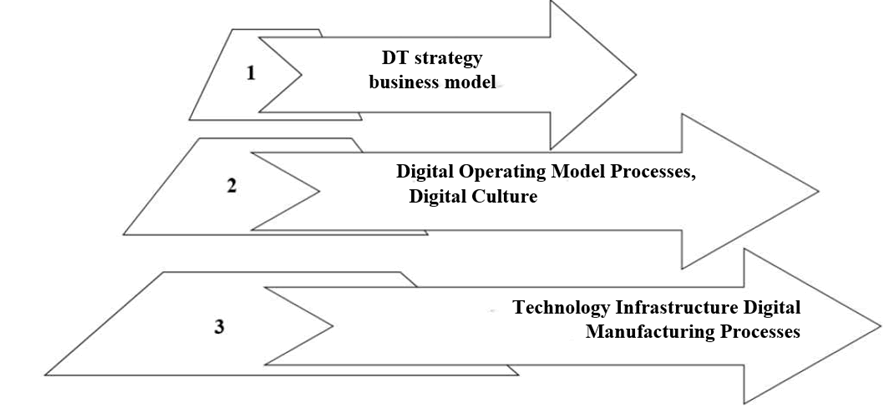
Figure 1. Three-level diagram of an enterprise’s digital transformation strategy.
At the strategic level, a digital strategy and a business model are presented.
The former types are discussed as “attitudes” for the target business actors, highlighting the specific issues they encompass as for four “universal” problems of organizing: task division, task allocation, reward provision, and information provision. Finally, it is worth noting that the subsequent description of types follows and adapts the original proposal.
Digital Business Defender (DBD) organizations usually are usually oriented toward execution in terms of cost efficiency and penetration in their current markets. Thus, planning is actually a relevant activity for developing and carrying out digital business initiatives, which are then evaluated and eventually revised. For task allocation, DBDs adopt a functional organizational structure, with a high degree of formalization and division of labor. The efficiency orientation influences reward provision as well as human resource allocation (focus on cost-control areas and operations). For information provision, DBDs adopt “long-looped” vertical information systems and simple forms of coordination (standardization and scheduling). The main risk faced by DBDs in the current digital business environment is actually the failure to detect new service/product opportunities.
Digital Business Prospector (DBP) organizations are oriented toward differentiation through innovation and market responsiveness. The DBP type is constantly ready to alter its organizational structure to accelerate responses to environmental change. DBP is suitable for or adoption by tech start-ups and tech-driven enterprises focused on digital business innovation. Thus, testing, prototyping and trend scouting and ideation are preliminary activities to develop and carry out digital business initiatives, which are then evaluated and only formally planned as a final step. Planning is actually problem solving and findings oriented, and is heavily dependent on experimental and testing feedback.
Digital Business Analysis (DBA) organizations have a double orientation, either towards execution on their main market or differentiation in terms of innovation and market responsiveness. As mentioned above, in the first market, they operate as the DBD does, whereas in the second market, they act rather than a DBP. Thus, they have a matrix organizational structure, made up, on the one hand, of functional budget oriented divisions for the stable businesses; on the other hand, they rely on self-contained projects as well as results oriented groups for the research and development of innovative solutions.
At this level, the concept of digital transformation of the enterprise, strategy, business model, product portfolio, and digital production culture is determined. Here, all fundamental ideas are formed about how to work with the existing business model, what steps we are taking to change, etc.
At the next level, in the middle of the pyramid, an operating model is formed, which includes all the digital processes of the organizational structure. Here, the formation of a digital culture takes place, i.e., now, the enterprise is working in a new way; now, all processes are arranged automatically, and more time is released directly to fulfil its duties.
At the third level, the full work of digital production is launched tactically, where the technological infrastructure and processes of digital production have been created. This stage includes the transformation of the production itself, starting with the implementation of control programs for numerical control (CNC) machines, and additive technologies. The technologies used here that make it possible to exclude the human factor from work.
Next, we consider the methodology for developing a digital transformation project for an industrial enterprise.
The strategy for the digital transformation of an industrial enterprise is comprehensive work in key areas (Figure 2).
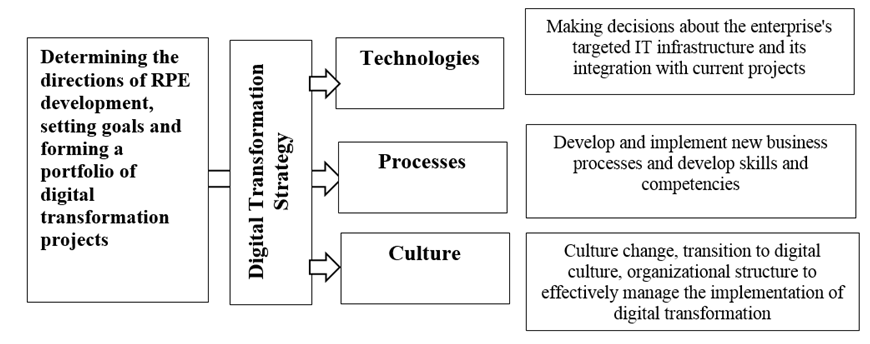
Figure 2. Key directions of strategies for the digital transformation of an industrial enterprise.
We have discussed the general conceptual provisions of this concept. To implement the enterprise digital transformation project, let us move on to a consistent description when performing practical steps.
If the whole concept in our country includes completely all four steps, then the project of digital transformation of the enterprise, for the most part, touches on the first, two steps-this is the assessment of "digital maturity," the development of a digital strategy for an industrial enterprise, a roadmap. The result of the project of digital transformation of the enterprise should be a strategy for the development of digital transformation, an updated operating business model, and a set of solutions for enterprise management.
Stage 1. Evaluation of "digital maturity." In our opinion, this is the most important stage. At this stage, the assessment or diagnosis is carried out to identify the enterprise and describe all existing business processes. When the level of infrastructure preparation, is considered, changes in the infrastructure can be identified. Evaluating how the electronic archive of work with various types of documentation is arranged, etc. This stage will allow us to avoid many factors and risks in the future. To understand what factors and risks may hinder the implementation of the project and how they can be avoided, or to foresee, consider each of these factors, and provide a brief explanation.
Lack of connectivity: For example, if, from the point of view of acceptable infrastructure, we make a miscalculation somewhere, then there will be a lack of connectivity, end users will not be able to work with the same data, some kind of failure will appear, some kind of business process will appear again, which is not automated and employees will have to do all the work manually, etc. As a result of these calculations, some error was made, the error and the effect would not be as high as expected, i.e., something went wrong, and we strongly did not want it. This is very important, because, as a result of digitalization, we create a single model. It should be single and indivisible–the information model of the enterprise. Therefore, at this stage, we must clearly approach this issue.
Exceeding the budget, i.e., we do not provide something in the budget, or do not calculate how long it will take to implement, and this is always an increase in the deadlines. Increasing the deadlines is the loss of our money, i.e., exceeding the budget. Therefore, at this stage, it is necessary to calculate everything as much as possible so that such a miscalculation does not occur.
Loss of manageability: This risk suggests that at some stage, there was a miscalculation, and business processes were out of our control. We do not have the ability to track something, or something goes wrong with how we intended it, etc. In this case, this should be avoided if possible.
Given the decrease in production efficiency, we understand that the stage of transition from one business model to another is quite risky, and occurs because at any time, we will have to transform. The task of the head of the transformation plan is to ensure that this happens as smoothly and painlessly as possible. If there is a delay at some stage, then at the same time, the production efficiency decreases as quickly as possible. This is very bad for the enterprise, and if possible, these things should be avoided.
Note that management during the management of the enterprise primarily pursues the goal of making a profit by fulfilling contractual obligations to fulfil the order and satisfying the customer's requirements. For the timely implementation of the state order, the management of the enterprise must consider external and internal factors that affect the effectiveness of production processes around technological equipment, business processes, production, and inter technical logistics, in processes in which employees are directly engaged.
Next, we consider the strategy of digital transformation of the enterprise and its elements (Figure 3).
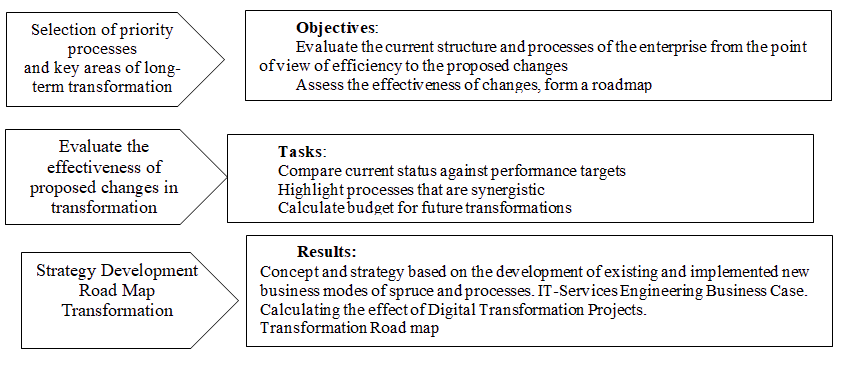
Figure 3. Enterprise digital transformation strategy.
This is the second step. At this stage, goals and objectives are formed, the expected result that we want to obtain as a result of these activities.
Here, priority processes and target areas of activity are selected for transformation. At this step, all prospects, digital initiatives, lean production projects are determined. This step involves evaluating the vision of the enterprise, etc., and includes evaluating the current process structure in terms of efficiency. Process of analysis of readiness for proposed changes, etc.
The next step is to assess the effectiveness of the proposed changes. Concept development: In this step, the tasks are formulated step by step, and two business models are compared. Here, we analyse the proposed model on the basis of the previous step and compare it with the existing model, i.e., what benefits, where what will decrease, where what will improve, and how this will affect the further development of the enterprise. In this step, it is very important to calculate budgets and develop a financial model for future transformations.
The next element is the development of a strategy, a business model. In this step, we develop a roadmap that includes a specific set of steps, with specific numbers, dates and a reference to the existing business model, which, allows all activities to be controlled from the point of view of management and implemented step by step. Here, the economic effect of the project is calculated. This generally allows you to see the completeness of the picture after the transformation. Below is an example of a digital transformation strategy plan for an enterprise (Figure 4).
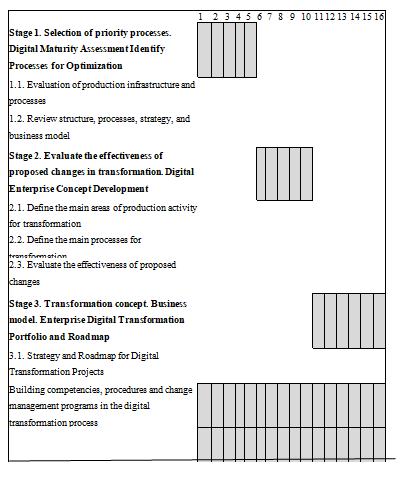
Figure 4. Example of a digital enterprise transformation strategy plan.
In general, the presented plan corresponds to the above steps. The implementation of this plan takes 16 months. The plan is divided into 4 stages. The first stage took 5 months. It involves work to assess the digital maturity of the enterprise. The second stage is from 6–9 months, where the effectiveness of the proposed changes is assessed, a comparison before and after, setting tasks, etc. The third stage is directly a ready-made business model for transformation; it takes the remaining time.
Notably, with respect to the formation of competencies, procedures and a change management program in the process of digital transformation, and the implementation of these three steps, employees of the enterprise will form "digital thinking." Workers immerse themselves, and understand what it is, i.e., they already understand why these steps, affect further development. If, at first, everything was not clear, then at the end, by the time the finished roadmap was issued, they fully understood how all the stages could be completed. Accordingly, for the "digital thinking" of the staff to be formed, it is necessary that the managers at each step during the training seminar inform the staff about their steps.
Considering the description of practical steps, the enterprise has the following advantages and results:
• Development of a culture of digital transformation.
• Effective use of human resources occurs through motivation: in working with problems; in lean production projects, kaizen proposals for improvements.
• Due to digitalization, automation, the share of hard, dangerous and harmful work, the subjective influence of a person is reduced.
Thus, when planning a digital transformation of the enterprise, it is necessary to adhere to certain rules, the plan developed and the implementation of practical steps.
To confirm this, we present the results of a study in the field of the digital transformation of Russian enterprises.
During the implementation stage, many respondents were interviewed, namely, CIOs, heads of IT departments, and implementation specialists. As a result of the survey, many factors that form the complex of modern production and the actual need to introduce modern digital systems were identified.
We have identified three main factors that have the greatest degree of influence on the formation of a modern enterprise during digital transformation.
The most important factor, accounting for 40% of this total, is that the product becomes much more complex, an increasing number of modern development and production methods are involved, and many different services are involved in development. It follows that the level of interaction between various services is growing, and therefore, it becomes necessary to organize the work of services in a single digital space. All this allows you to tie together not disjointed.
The next factor, which, according to the respondents, amounted to 36%, was the frequent renewal of the model range. Today, it is practically necessary to offer options, versions of new products, etc., in conditions of high competition. This significantly shortens the development time; therefore, the most important resource is time, which becomes catastrophic as it is constantly lacking for further steps, and digital transformation is being taken for this purpose.
The third most important factor, which, according to the respondents, amounted to 29% high competition erodes advantages. This factor suggests that, today, all products are rationed, there are requirements, and high development speeds, and products become quite similar due to local restrictions. It is very difficult for an enterprise to concentrate on competitive advantages. To save time and concentrate on their competitive advantages, digital transformation is necessary. To do this, in the figure, we present the results of a survey of IT enterprises (Figure 5).
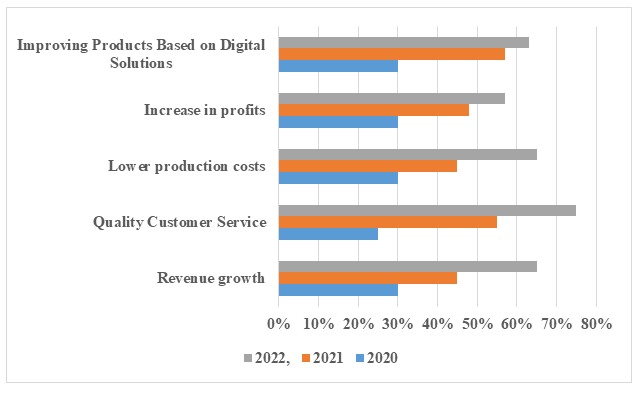
Figure 5. Results of a survey of IT enterprise managers.
The main conclusions of the survey are presented below.
First, the implementation of digital technologies in Russian industry is important for enterprises of all sizes. On the one hand, enterprises must digitize their internal processes and procedures; on the other hand, they must develop new services and models of digital business. Digitalization is the use of digital technologies to change the business model and provide opportunities for profit and value creation. Digitalization is also defined as the process of transition to digital business. In the field of digitalization, the task of enterprises is to identify new customer needs as a result of the distribution of digital services and applications. Digital transformation leads to the merger of online and offline, breakthrough technologies and radical: Changes in entire industries.
Second, the main accents that form in the conditions of the digital economy, ensuring the competitiveness of domestic enterprises, are placed in favour of speed, flexibility, and efficiency. Digital capabilities apply equally to new companies and long-term companies, but the competition ultimately benefits, above all, those enterprises that have chosen a timely transition to digital transformation.
Third, to effectively manage enterprises, management needs to use modern concepts of lean production, digital production, and the breakthrough concept of the digital twin. At the same time, the implementation of lean production projects at the enterprise using digital technologies, including digital twins, allows one to significantly reduce the cost of introducing and manufacturing various types of products, optimize their design, and, taking into account the customer's requirements, adjust the parameters of the production and economic system.
Thus, an important task is not only an objective transition to digital transformation, but also preparing the enterprise for changes in this process from the point of view of managing digital transformation projects of the enterprise.
The study yielded the following main results.
As a result of studies of existing publications, the author conducted an analysis and concluded that, today, there is no single generally accepted concept of the digital transformation of an enterprise to determine it, despite the relevance of this task. The author clarified the definition of the "digital transformation of the enterprise" from the perspective of the internal environment of enterprise management, and described the characteristics of the main elements of the digital transformation of the enterprise.
The article provides an overview of the implementation of digital technologies in foreign and domestic industries, and shows interim results.
The possibility of digital transformation of the enterprise is scientifically justified. Enterprise management in the new fourth industrial revolution is impossible without the use of digital technologies. At the same moreover, the introduction of digital technologies has led to the need to form new business models and processes; communication mechanisms; changes in the organizational structure, and the organizational culture of enterprises–into a digital culture.
The stages of forming a strategy for the digital transformation of an industrial enterprise are presented, and the main stages of the implementation of the roadmap are described.
The digital transformation strategy of the enterprise should be integrated into lean projects to ensure the constant progress of the maturity level, and not as-a separate additional program.
Thus, the results obtained make it possible to solve this problem, to carry out not only an objective transition to digital transformation of the enterprise, but also to prepare the enterprise for changes in this process, in terms of implementing the strategy of digital transformation of the enterprise, managing projects for digital transformation of the enterprise, and aiming at effective development of the production-economic system.
In future work, empirical research will be developed on real cases for business actors engaged in digital business innovation, to ground the proposals presented in this paper on empirical evidence and make them evolve according to the results.
[Crossref] [Google Scholar] [PubMed]
[Crossref]
[Crossref]
[Crossref]
[Crossref]
[Crossref]
[Google Scholar] [PubMed]