
Research & Reviews in Pharmacy and Pharmaceutical Sciences
 Menu
Menue-ISSN:2320-1215 p-ISSN: 2322-0112
e-ISSN:2320-1215 p-ISSN: 2322-0112
Zheng Luo, Luyun Xia, Wenying Huai, Huan Xu, Haiyan Zhu, Zhiyan Fang, Lili Huang, Yunhui Chen, Ruocong Yang, Tian-e Zhang*
Department of Medicine, Chengdu University of Traditional Chinese Medicine, Chengdu, China
Received: 20-Dec-2024, Manuscript No. JPPS-24-155972; Editor assigned: 25-Dec-2024, Pre QC No. JPPS-24-155972 (PQ); Reviewed: 08-Jan-2025, QC No. JPPS-24-155972; Revised: 11-Mar-2026, Manuscript No. JPPS-24-155972 (R); Published: 18-Mar-2026, DOI: 10.4172/2320-1215.15.1.001
Citation: Luo Z, et al. Integrating Network Analysis and Experimental Validation to Reveal the Autophagy-Associated Mechanism of Danggui Shaoya San (DSS) Prescription in the Treatment of Non-Alcoholic Simple Fatty Liver. RRJ Pharm Pharm Sci. 2026;15:001.
Copyright: © 2026 Luo Z, et al. This is an open-access article distributed under the terms of the Creative Commons Attribution License, which permits unrestricted use, distribution and reproduction in any medium, provided the original author and source are credited.
Visit for more related articles at Research & Reviews in Pharmacy and Pharmaceutical Sciences
Background: This study explores the mechanism of Danggui Shaoyao San regulating liver autophagy function in the treatment of Non-Alcoholic Simple Fatty Liver (NAFL). The clinical efficacy of Danggui Shaoyao San in treating NAFL was evaluated and analyzed using a combination of network pharmacology and experimental validation. Methods: The chemical constituents of DSS were detected by HighPerformance Liquid Chromatography Q-Extractive Mass Spectrometry (HPLCQ-Exactive-MS). Related compounds and targets were screened from the Integrative Pharmacology-based Research Platform of Traditional Chinese Medicine (TCMIP); genes associated with NAFL were identified in GeneCards and OMIM. Cytoscape 3.8.2 was used to construct the active componentspotential therapeutic target network. Gene Ontology (GO) and the Kyoto Encyclopedia of Genes and Genomes (KEGG) of potential therapeutic targets were carried out on the Metascape platform. A Protein-Protein Interaction (PPI) network was generated using STRING. Molecular-docking analyses were performed with the AutoDockTools V1.5.6. Finally, the predicted results were preliminarily verified with experiments. Results: Network pharmacology analysis expounded the active components of DSS mand revealed the autophagy-associated mechanism of DSS treating NAFL. Molecular-docking data also supported the hypothesis that the core components of DSS, Lauric Acid, Atractylenolide III, and Catechin interacted well with Beclin1 and LC3. Experiments results indicate that DSS improved serum liver function parameters, lipid parameters, and alleviated hepatic steatosis in rats with NAFL. RT-PCR experiments showed that DSS increased the mRNA expression levels of the autophagy-associated targets Beclin1 and LC3. Conclusions: DSS can reduce liver damage, serum lipid levels, and hepatic steatosis in NAFL rats by increasing the mRNA and protein expression of Beclin1 and LC3, restoring liver cell autophagy function. This provides a basis for the therapeutic mechanism of DSS in treating NAFL.D.
Danggui Shaoyao San; Non-alcoholic simple fatty liver; Network pharmacology; Molecular docking; Experimental verifications
Non-Alcoholic Fatty Liver Disease (NAFLD) is a common and complex metabolic-related disease, which is divided into two main subtypes: Non-Alcoholic Simple Fatty Liver (NAFL, approximately 80%), a non-progressive form of NAFLD that rarely progresses to cirrhosis; and Non-Alcoholic Steatohepatitis (NASH, approximately 20%) of progressive NAFLD, which can lead to cirrhosis, hepatocellular carcinoma, and liver-related death. It can affect people of all ages and is especially prevalent in developed countries. It is estimated that about 25% to 30% of the population in the world suffer from NAFLD. Therefore, NAFLD has become one of the world’s public health problems. The potential pathogenesis of NAFLD is complex and multifactorial, and its mechanism has not been fully elucidated. It is closely related to hepatic steatosis, insulin resistance, intestinal flora imbalance, and the interaction of various factors. Currently, no drug for NAFLD has been approved by the US Food and Drug Administration. Given the high prevalence of NAFLD in the population and the fact that non-progressive NAFL is an early and reversible form of NAFLD, exploring the goals of NAFL treatment has become crucial [1].
Autophagy is the primary process by which cells digest their own contents to provide energy and maintain cellular homeostasis. It involves isolating cellular solutes such as proteins, damaged organelles, and lipids within the cell to form double-membrane structures called autophagosomes, which then fuse with lysosomes for substrate degradation and release of free amino acids. Autophagy intersects with various signaling pathways and regulates other cellular and tissue processes including proliferation, apoptosis, differentiation, and inflammation. Dysregulation of the autophagy-lysosome pathway is associated with various pathological conditions including cancer, infections, autoimmune diseases, inflammatory disorders, neurodegeneration, and aging. Studies indicate that autophagy strongly counters NAFLD and may be partially suppressed during its pathogenesis. Deletion of various autophagy-related proteins (ATGs) and genes encoding key autophagy regulatory factors (including ATG7 and ATG14) in liver cells exacerbates susceptibility to NAFLD in mice receiving a High Fatty Diet (HFD) or Methionine-and Choline-Deficient (MCD) diet, accompanied by increased pro-inflammatory cytokines induced by HFD. These findings suggest that autophagy not only maintains the internal homeostasis of liver cells but also treats NAFLD by reducing lipid accumulation, immune cell infiltration, and liver inflammation [2].
Danggui Shaoyao San (DSS) is a classic formula, which is derived from the Golden Chamber Synopis. DSS consists of six herbs: Angelica sinensis (Oliv.) Diels (Danggui in Chinese, DG), Paeonia lactiflora Pall. (Baishao in Chinese, BS), Poria cocos Schw.Wolf (Fuling in Chinese, FL), Ligusticum chuanxiong Hort. (Chuanxiong in Chinese, CX), Atractylodis macrocephalae Rhizoma (Baizhu in Chinese. BZ), Alismatis rhizoma (Zexie in Chinese, ZX). The TCM principle of "treating the different diseases with the same therapies" has led to its development for the treatment of other ailments, despite its original application in the treatment of gynecological-related illnesses. Previous studies have shown that DSS can improve the antioxidant capacity of NAFLD rats by activating the Keap1/Nrf2 signaling pathway. Moreover, DSS can also treat NAFLD by inhibiting TLR4/MyD88/JNK signaling pathway to attenuate inflammatory response. In addition, in a clinical observation, Li et al. observed that DSS combined with exercise therapy had a significant improvement in liver function, lipid index, liver CPA and BMI in patients with NAFLD. These studies support the use of DSS in the treatment of NAFLD, however the mechanism needs further refinement [3].
Network pharmacology is a holistic approach to the identification of active chemicals in crude drugs, the prediction of a number of pharmacological targets. This approach is consistent with the “holistic view” in the tenets of Chinese medicine. As a result, this study utilized pharmacological networks to investigate the relationship between DSS and NAFL, and whether DSS can intervene in the progression of NAFL by regulating liver autophagy, further validated through experiments. The flowchart is shown in the following (Figure 1).
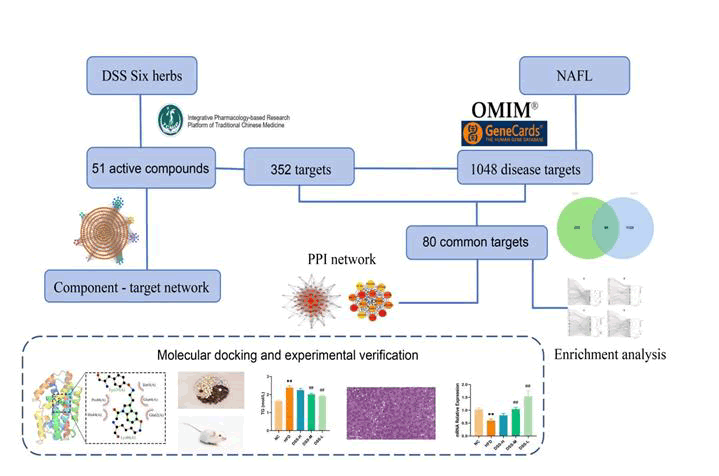
Figure 1. Flowchart shows the study’s design in details.
Materials and reagents
Plant material: DANG GUI (DG, 240304-61) and CHUAN XIONG (CX, 231107-61) were obtained from CHENG DU JI AN KANG PHARMACEUTICAL CO., Ltd, China. BAI SHAO (BS, 240200011), FU LING (FL, 240300861), and ZE XIE (ZX, 231200451) were obtained from CHENGDU KANGMEI PHARMACEUTICAL CO., Ltd, China. BAI ZHU (BZ, C038240301) were obtained from CHENDU XINFOY CHINESE HERBAL MEDICINE CO.,LTD.
Reagents: AST assay kit (IFCC method) Shenzhen Mindray 140220009; ALT assay kit (IFCC method) Shenzhen Mindray 140120013; TG assay kit (oxidase method) Shenzhen Mindray 141720007; TC assay kit (oxidase method) Shenzhen Mindray 141620009; HDL-C assay kit (direct method) Shenzhen Mindray 142120008; LDL-C assay kit (direct method) Shenzhen Mindray 142020005.
Sample preparation: DSS is composed of six kinds of crude drugs including DG, BS, CX, FL, BZ, and ZX. All DSS herbs were dried and smashed (3:16:8:4:4:8). The six drugs were mixed in the prescribed proportion to a total of 129 g. Initially, DSS was boiled for one hours. After filtering out the solution, use 500 mL of water to boil the herbs again for 40 minutes. Filter out the medicine and combine the two decoction solutions. According to the preliminary experimental results, in order to fit the volume range of rats (≤ 5 ml), the double extraction solution was further concentrated to 2.56 g/ml. For animal experiments, 2.56 g/ml solution was used as the DSS high-dose group (DSS-H), diluted to 1.28 g/ml and 0.64 g/ml respectively as the DSS Medium dose group (DSS-M) and DSS Low dose group (DSS-L). The solutions were stored at -30â??.
Take the DSS solution sample from the -80â?? refrigerator, thaw on ice, vortex for 10 seconds, and mix well; Take 50 μL of the sample and place it into a 1.5 mL centrifuge tube. Add 300 of 70% methanol containing internal standard extraction solution; Vortex for 3 minutes, 12000 r/min, 4â??, centrifuge for 10 minutes; Transfer 200 μL of the supernatant into another 1.5 mL centrifuge tube and let it stand for 30 minutes in a 4â?? refrigerator; 12000 r/min, 4â??, centrifuge again for 3 minutes; Transfer 180 μL of the supernatant and store it in an injection bottle for HPLC-Q-Exactive-MS detection [4].
UPLC-MS/MS analysis
Chromatographic conditions: AccucoreTM C18 HPLC column (3 mm × 100.0 mm, 2.6 μm). Mobile phase: (A) H2O+0.1% formic acid (B) acetonitrile; flow rate: 1.0 mL/min; column temperature: 35â??; injection volume: 10 μL. Gradient elution program: 0 min, 5% B; 0-40.0 min, 30% B; 40.0-65.0 min, 30%→55% B; 65.0-85.0 min, 55%→100% B; 85.0-90.0 min, 100% B.
Mass spectrometry conditions: Positive ion mode, ion source voltage: 5500 V, ion source temperature: 600â??, de clustering voltage (DP): 100 V, Collision Energy (CE): 40 eV, Collision Energy Expansion (CES): 10 eV. Scanning mode: negative ion mode, positive ion source voltage: -4500 V, ion source temperature: 500â??, de clustering voltage (DP): 100 V, Collision Energy (CE): -40 eV, Collision Energy Expansion (CES): 10 eV. The scanning range of primary mass spectrometry parent ions is 100-2000.
Screening of active compounds and drug targets of Danggui Shaoyao San
This study used TCMIP v2.0 (http://www.tcmip.cn) to search for the components of DG, BS, CX, FL, BZ, and ZX. This database evaluates the drug like properties of various chemical components based on quantitative assessment of drug like properties (QED), with estimated values ranging from 0 (all properties are unfavorable) to 1 (all properties are favorable), which can be divided into strong (QED>0.67), medium (0.49 ≤ QED ≤ 0.67), and weak (QED<0.49). This study will use ingredients with QED ≥ 0.49 as the effective ingredients of the formula. Select drug action targets with similarity score ≥ 0.8 as candidate target profiles for DSS. Conditions associated with data were reviewed; duplicate targets were removed; the corresponding gene abbreviation of targets were identified to facilitate follow-up research. The Cytoscape 3.8.2 software was used to create the active compound - potential therapeutic target network to explore active compounds and their potential targets. Core compounds were identified using an herb-compound-target network [5].
Access to therapeutic targets for NAFL
Disease targets of NAFL were obtained from the following two sources: The OMIM database (https://omim.org/) and the Genecards (https://www.genecards.org/). The target is approved symbol, which was selected from OMIM. Targets with a relevance score above the median value were selected from the GeneCards database. The search term used is “non-alcoholic simple fatty liver” to elicit the NAFL disease targets after removing the duplicate targetsfrom the search results. To acquire prospective therapeutic targets, a Venn diagram of drug targets in connection to disease targets was generated on the bioinformatics website (http://www.bioinformatics.com.cn/). Overlapping DSS and NAFL targets identified were considered the best potential targets of DSS in the treatment of NAFL.
Gene Ontology (GO) and KEGG pathway enrichment analysis
To further explore the relationship between possible biological pathways and potential therapeutic targets, functional and pathway enrichment analyses of potential targets were performed with Metascape (http://metascape.org/gp/index.html). Enrichment results were considered significant at P<0.01 and the result was shown as a sankey dot pathway enrichment chart using the bioinformatics website [6].
The Protein-Protein Interaction (PPI) network
STRING (http://string-db.org/) was used to create a PPI network of prospective therapeutic targets, with free proteins eliminated and the rest set to default. Then, Cytoscape 3.8.2 was used to analyze the network. Then, CytoHubba, a Cytoscape 3.8.2 module, was employed to determine the degree of centrality. The most prominent protein targets involved in the most biological pathways were considered the most promising therapeutic targets.
Molecular docking validation
First, three-dimensional structures of genes of interest as protein receptors were obtained from the PDB database (http://www.rcsb.org/). Then, two-dimensional structures of the core DSS chemical compounds as ligands were obtained from the TCMSP databases (http://tcmspw.com/). Subsequently, the AutoDock Vina docking model was used to calculate the affinity between the receptors and ligands. Affinity ≤ −5.0 kcal/mol indicated there was a strong interaction between the receptor and the ligand. The lower the affinity of the ligand and receptor, the more stable the binding was between the two. The results were visualized using PyMOL software [7].
Preparation of NAFL animal model
Sixty male SD rats, weighing 150 g ± 10 g each, were maintained at a room temperature of 22 ± 2â?? and fed for 12 hours daily. They were housed in individual cages, four to five per cage, in a light-dark cycle. Following a seven-day adaptation period, the modeling process commenced. The rats were then randomly assigned to two groups: A normal diet group (NC) consisting of 15 rats and a High-Fat Diet group (HFD) with 45 rats. The NC group received a standard basal diet, while the HFD group was administered a high-fat diet (comprising 78.8% basal diet, 10% lard, 10% egg yolk powder, 1% cholesterol, and 0.2% bile salt). Throughout the feeding period, three rats from the NC group and five rats from the HFD group were randomly selected every 15 days for sampling and pathological examination to assess the progress of the modeling.
After the rat model meets the requirements of the NAFL model, the HFD group was randomly selected and divided into a High-Fat Diet group (HFD) of 6 rats, a high-dose Danggui Shaoyao powder group (DSS-H) of 6 rats, a medium dose Danggui Shaoyao powder group (DSS-M) of 6 rats, and a low-dose Danggui Shaoyao powder group (DSS-L) of 6 rats. Calculate the dosage for rats based on the conversion of equivalent doses of human and animal drugs. For example, an adult weighing 70kg orally takes 129 g of raw medicine daily, which is equivalent to a rat equivalent dose of 129 g/70 kg x 6.3=11.61 g/kg/d. The DSS-M was given a medium dose of 11.61 g/kg/d, a low dose of 5.81 g/kg/d at a concentration of 1/2, and a high dose of 23.22 g/kg/d at a concentration of 2 times, DSS-H, DSS-L group was orally administered once a day; The NC group and HFD group were given equal amounts of drinking water by gavage. Take samples 30 days after administration [8].
The experimental unit was licensed under the number SYXK (Sichuan) 2014-124. Both regular feed and high-fat feed for the rats were purchased from Chengdu Dashuo Experimental Animal Co., Ltd., which holds a license with the number SCXK (Sichuan) 2020-030. Prior to conducting this experiment, it underwent review by the Experimental Animal Ethics Committee of Chengdu University of Traditional Chinese Medicine. The review number assigned to this study was 2021DL-001.
Collection and preparation of sample
A sterile environment, serum was collected and centrifuged for biochemical index analysis. Then part of the liver was stored in 4% tissue fixative fluid for Hematoxylin-Eosin (HE) staining. The remaining liver tissue was quickly divided into cryopreserved tubes and put into −80°C refrigerator for RT-qPCR analysis.
Serum biochemistry
Alanine Transaminase (ALT), Aspartate Transaminase (AST), Triglyceride (TG), High-Density Lipoprotein Cholesterol (HDL-C), and Low-Density Lipoprotein Cholesterol (LDL-C) levels in blood were measured. All of the kits are from Mindray (Shenzhen, China) and are used in accordance with the instructions. Tests were performed in a biochemistry analyzer (BS-240VET, Mindray, China).
Histopathological examination
Liver tissues were fixed in 4% paraformaldehyde for 24 hours and then embedded in paraffin wax, cut into 3 μm thick sections, and stained with Hematoxylin-Eosin (H&E). A light microscope (CX31, Olympus, Japan) was used to examine the diseased symptoms of rat liver [9].
Real-time PCR
Total RNA extracts were obtained from frozen livers using TRIgent (Mei5bio, Beijing, China). The RNA was reverse transcribed to cDNA using HiScript® II RT SuperMix for qPCR (Vazyme, Nanjing, China). Real-time PCR was performed using qTOWER 3G (Analytic Jena, Jena, Germany) with Taq Pro Universal SYBR qPCR Master Mix (Vazyme, Nanjing, China). Reaction procedure is shown. The relative expression of genes was calculated using the 2-ΔΔCt method using β-actin as an internal reference. The primers were purchased from the Shanghai Sangon Biological Engineering Technology & Services Co., Ltd. (Shanghai, China).
Statistical analysis
Data were expressed as mean ± standard deviation and analyzed using GraphPad Prism 8.0.1. Data were analyzed by one-way Analysis of Variance (ANOVA). Results were considered statistically significant at p<0.05.
Identification of components DSS solution
As shown in Figure 2, HPLC-Q-Exactive-MS was utilized to establish the quality control of DSS. Tentatively characterized by the intersection between positive and negative modes, a total of 122 compounds were detected in DSS. After comparing and verifying with the relevant database and Compound Discoverer 3.2 software, 93 compounds were ultimately selected. These compounds include different types of constituents, such as acids, vitamins, flavonoids, terpenoids, glycosides, polyphenols, etc.
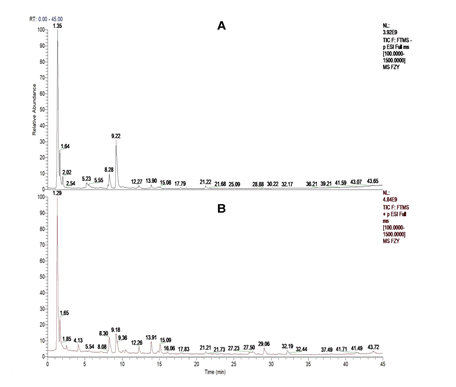
Figure 2. Total ion current based on a HPLC-Q-Exactive-MS chromatogram in positive and negative ions mode.
Active compounds and potential therapeutic targets for DSS
To understand the multicomponent pharmacological mechanisms underlying the effects of DSS, a total of 59 ingredients from six herbs in DSS were screened, including 24 of DG, 4 of BS, 13 of CX, 9 of ZX, 6 of FL, and 3 of BZ. Among these, 3-O-trans ferulylquinic acid, vanillin, and retinol was found in DG and CX. Moreover, DG and BS have phenol. DG and BZ also have pavilion. Next, 59 active ingredients were used to derive 352 drug targets. In Cytoscape, an active compound-possible therapeutic target network with 59 active ingredients and 352 potential therapeutic targets was created (Figure 3A). The network included 95 nodes and 584 edges. The top eight compounds in terms of degree value were: Undecanoic acid, Caprylic acid, Lauric acid, Oriediterpenol, Ergosterol, Atractylenolide III, Catechin, and Retinol. These active compounds are promising new research options for NAFL treatment and prevention.
Acquisition of disease target data and screening of intersecting targets
In all, 1203 disease targets were found in the OMIM and Genecards databases. When the drug targets were intersected with the disease action targets, 80 potential therapeutic targets emerged (Figure 3B).
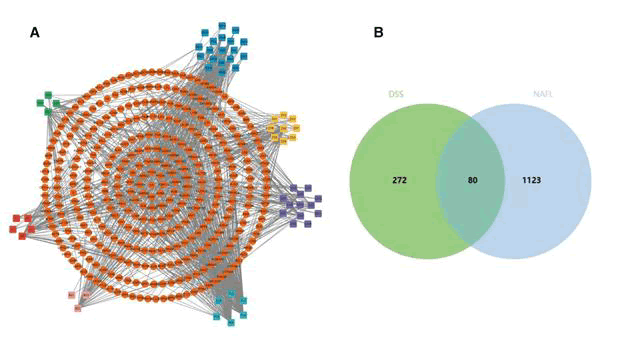
Figure 3. (A) C-T network of DSS. The figure was constructed by combining 59 DSS and 352 corresponding targets. The square represents constituents. Each color represents a single drug. The yellow circular represents the target. Targets in the inner circle display more relationships with constituents than those in the outer circles. (B) A Venn diagram showing the overlap of target genes: 352 targets for DSS and 1203 for NAFL, with 80 common targets between the two datasets.
Functional enrichment analysis
To clarify the potential functions of these 80 key targets, gene annotation and functional enrichment analysis were performed via using the Metascape platform. The top 15 GO biological processes were involved with four main aspects of treating NAFL, including cellular response to lipid, fatty acid metabolic process, regulation of lipid storage, regulation of inflammatory response, etc. (Figure 4A). Moreover, the top 15 GO molecular functions were associated with nuclear receptor activity, organic acid binding, fatty acid binding, steroid binding, etc. (Figure 4B). Additionally, the top 15 GO cellular components were secretory granule lumen, endocytic vesicle lumen, endoplasmic reticulum lumen, peroxisome, etc. (Figure 4C). Furthermore, the enrichment of KEGG signaling pathways demonstrated that DSS treatment of NAFL mainly involved the following: Metabolic disease-related signaling pathways (such as alcoholic liver disease and non-alcoholic fatty liver disease), cardiovascular disease-related signaling pathways (such as lipid and atherosclerosis and fluid shea stress and atherosclerosis), inflammation reaction-related signaling pathways (such as IL-17 and TNF) and autophagy-related signaling pathways (such as Insulin resistance and AMPK signaling pathway) (Figure 4D).
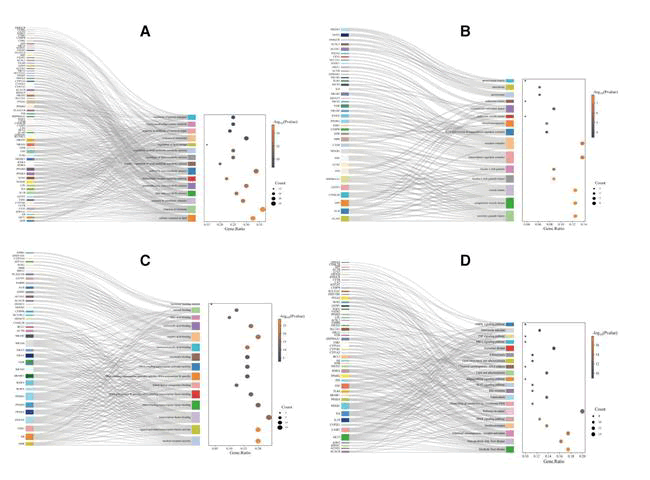
Figure 4. Enrichment and modular analysis of the key targets. (A-C) The top 15 significantly enriched terms in biological processes, molecular functions, and cellular components. (D) The top 20 significantly enriched terms in KEGG pathways.
Protein-Protein Interaction (PPI) network analysis
In further analysis, the 80 targets identified by the intersection described above were uploaded to the String database, and the species “Homo sapiens” was selected to construct a PPI network (Figure 5A). The downloaded file was imported into Cytoscape to calculate the degree value and reconstruct the PPI network. The network included 75 key nodes and 710 edges, and the highest node value was 52. To further investigate the potential mechanism, a modular network was constructed by applying the cytoHubba algorithm to reveal the kernel therapeutic targets. We obtained twelve core targets from this model: TNF, IL-6, IL-1β, ICAM1, and CXCL8. Among them, BCL2, CASP3, and NFKB1 are closely related to autophagy. The results above suggest that the crucial mechanisms of DSS in treating NAFL might be related to regulating autophagy.
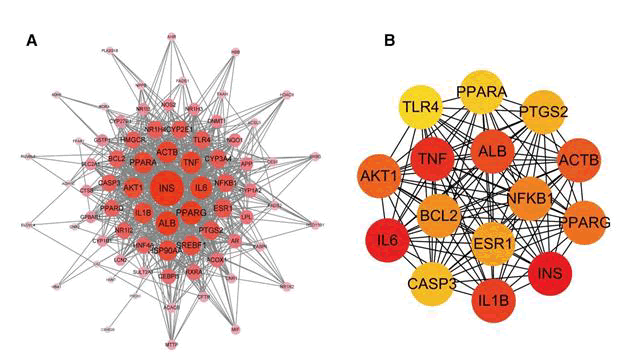
Figure 5. (A) PPI network of DSS-NAFL targets. The higher the degree value of the target, the larger the node and the darker the color. (B) Key targets of DSS in the treatment of NAFL.
Molecular docking
To further validate our predicted results. Based on the study of the autophagy literature, Beclin1 and LC3 were picked as the validation targets. The molecular docking method was adopted to verify the affinity of the identified key components in DSS to the Autophagy related targets. As shown in Figurw 6, the top three strong binding ability pairs of identified components and each key target were as follows: Beclin1 to Lauric Acid (−7.3 kcal/mol), Beclin1 to results of the most (−7.3 kcal/mol), and LC3 to Catechin (−6.1 kcal/mol). As shown in Figure 6, it was implied that Lauric acid, Atractylenolide III, and Catechin. played dominant roles in binding to the key targets above, which had a strong binding ability for them. Figure 6 displays the representative molecular docking results of the most stable pair of each key target and corresponding component.
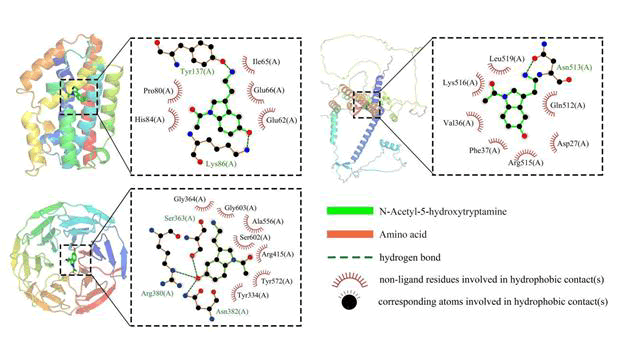
Figure 6. PPI network of Visualization of molecular docking partial results.
DSS improved blood lipid levels and liver function
As shown in Figure 7, TC, TG, HDL-C, AST, and ALT were significantly increased (P<0.01) and LDL-C was significantly reduced (P<0.01) in the HFD group. After administration, TC, TG, LDL-C, HDL-C, AST, and ALT were improved in the three administration groups. And the DSS-L group had a better effect. These results indicated that DSS can significantly improve the abnormal increase of blood lipid level and liver enzyme index in rats caused by HFD.
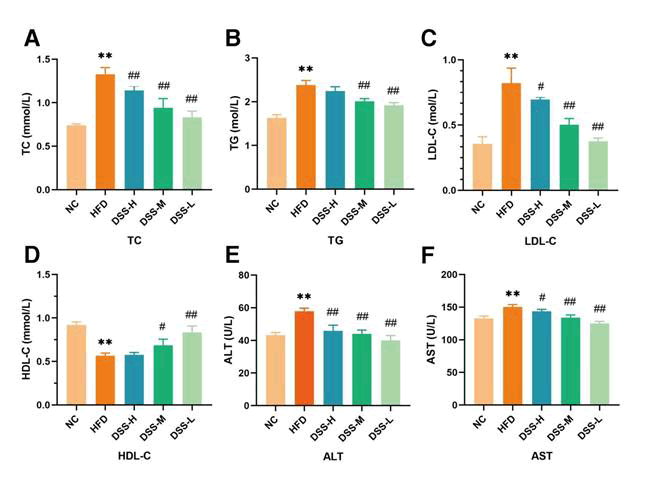
Figure 7. The results of liver function and blood lipids (n=6). Note: Quantitative data are presented as mean ± SEM, *P<0.05 and **P<0.01 NC compared to the HFD group, #P<0.05 and ##P<0.01 FLD groups compared to the HFD group.
DSS reduces steatosis in NAFLD rats
In the NC group, HE staining liver slices revealed an ordered arrangement of hepatocytes with no edema, steatosis, and necrosis (Figure 8A). In liver slices from both the HFD and DSS groups, large or tiny vacuoles inside the cytoplasm of hepatocytes were evident, suggesting hepatocyte steatosis. Compared to the HFD group, hepatocyte steatosis was improved in the three administration groups (Figure 8B-E). Therefore, DSS can significantly reduce lipid deposition in the liver.
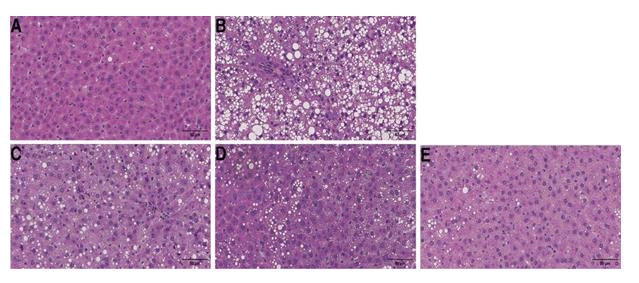
Figure 8. HE staining results of liver tissues in each group (Bar=50 μm).
DSS suppressed the expression of autophagy targets in the NAFL animal model
Based on the predictions of the network pharmacological analysis and a study of the autophagy literature, Beclin1 and LC3 were picked as the validation targets. RT-qPCR experiments on rat liver confirmed the gene level expression of these two targets (Figure 9A,B). Results indicate that the NC group had considerably higher mRNA expression of Beclin1 and LC3 than the HFD group (p<0.01). The DSS group showed significantly higher mRNA expression of Beclin1 and LC3 than the HFD group (p<0.01). These results suggest that DSS can treat NAFL by regulating the expression of autophagy related genes.
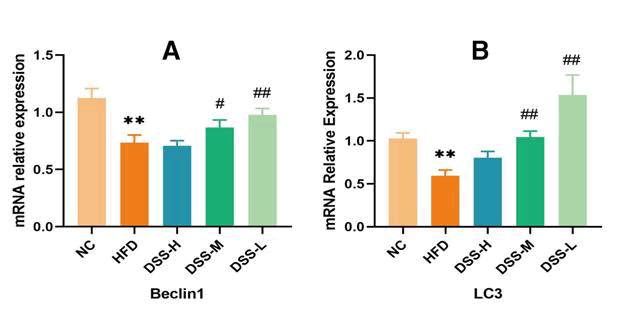
Figure 9. The mRNA expression levels of Beclin1 and LC3 in rat liver tissue (n=6). Note: Quantitative data are presented as mean ± SEM, *P<0.05 and **P<0.01 NC compared to the HFD group, #P<0.05 and ##P<0.01 FLD groups compared to the HFD group.
Traditional Chinese medicine has formed many classic compound formulas with good therapeutic effects on chronic and complex diseases in long-term clinical practice. Compound formulas and active compounds derived from traditional Chinese medicine are important resource libraries for drug research and development, playing an important role in the treatment of various complex chronic metabolic diseases such as NAFLD. The effectiveness of DSS in treating non-alcoholic fatty liver has been validated in animal and clinical trials. However, due to its complex composition and biological effects, its molecular mechanism and effective substances have not been fully elucidated. Therefore, this study utilized a network pharmacology method to systematically explore the underlying mechanisms of DSS in NAFL.
In the network pharmacology, by constructing active compound - potential therapeutic target network This study identified some of the top ranked important compounds: Undecanoic acid, Caprylic acid, Lauric acid, Oriediterpenol, Ergosterol, Atractylenolide III, Catechin, Retinol etc. Viswanathan Saraswathi et al. have shown that Lauric acid can to some extent weaken markers of liver damage in HF diet mice. In addition, they also mentioned that Caprylic acid may have certain metabolic benefits for obesity related diseases. This is consistent with our research findings. Another study by Qian Li et al. revealed that Atractylenolide III alleviates liver lipid accumulation and oxidative stress by promoting AdipoR1-mediated AMPK/SIRT1 pathways. In addition, Polyphenols, a naturally occurring plant chemical and secondary metabolite, are receiving increasing attention for their role in regulating metabolic syndrome. Studies have shown that catechins, a group of polyphenols, decreased hepatic lipogenesis through increasing the expression of AMPK-Thr172 while reducing that of ACC and SREBP1-C in rats with HFD-induced NAFLD. These findings confirm the efficacy of DSS in treating NAFLD. However, these compounds should be explored further.
In order to further investigate the mechanism of DSS treatment for NAFL. Combining the putative targets of DSS with the therapeutic targets of NAFL, 80 key targets were screened via network topological analysis. In addition, functional enrichment analysis of these 80 key targets implied that DSS exerts its effects on NAFL by interfering with multiple biological processes and signaling pathways such as fatty acid metabolic process, regulation of lipid storage, regulation of inflammatory responsethe metabolic disease-related signaling pathways (such as Alcoholic liver disease and Non-alcoholic fatty liver disease), inflammation reaction-related signaling pathways (such as IL-17 and TNF) and autophagy-related signaling pathways (such as Insulin resistance and AMPK signaling pathway) and other signaling pathways to treat NAFL. Therefore, the above results suggest that the key mechanism of DSS treatment for NAFL may be related to regulating autophagy. This is consistent with our hypothesis.
Moreover, the molecular docking method was conducted to validate the interaction between the identified chemical compounds and the autophagy related targets beclin1 and LC3. The execution of autophagy is accomplished by an array of evolutionarily conserved proteins that are collectively known as ATGs. ATGs perform their autophagic function through the following four stages: Initiation, autophagosomal assembly, autophagosomes mature, and degradation of autophagosomes. Assembly of autophagosomes requires a complex containing Beclin1, and Beclin1 acts as a must protein mediating autophagosome assembly, acting as a molecular platform to recruit proteins required to assemble autophagosomes. The proteins essential for autophagosome maturation are LC3, and LC3 is an ubiquitin-like protein. The necessary protein for autophagosome maturation is LC3, which is an ubiquitin like protein that forms LC3-II/LC3-I and is also used to evaluate the occurrence of cellular autophagy. According to the molecular docking results, it was suggested that there were several corresponding chemical compounds binding steadily to all the verified targets above. Lauric acid, Atractylenolide III, and Catechin showed excellent affinity for mitophagy-related proteins, which were accordingly considered important compounds of DSS for treating DN. Subsequently, literature retrieval was applied to explore whether these key compounds could improve autophagy. It was found that Atractylenolide III increased LC3-II expression and decreased p62 expression, restoring LPS-induced autophagic flux in BV2 microglia cells despite the disease model being neuronal cells. Additionally, Atractylenolide III increased LPS-induced BV2 microglia cells’ phosphorylation of AMPK and ULK1 and upregulated Beclin1 expression in cells, which was abolished by the addition of the autophagy inhibitor Wor. Moreover, it was demonstrated that Epigallocatechin-3-gallate has anti-obesity effects through the upregulation of Beclin1-dependent autophagy and lipid catabolism in white adipose tissue. it is not yet known whether these compounds can treat NAFL by regulating liver autophagy. Therefore, further verification experiments are needed to reveal the effect and mechanism.
It was experimentally verified that DSS was found to reduce hepatic lipid ectopic accumulation and adipogenesis in NAFL rats induced by a high-fat diet and dramatically improved TG, TC, HDL-C, and LDL-C in blood lipids when compared to the HFD group. DSS also lowered the levels of AST and ALT, which is a biochemical indication of liver damage. Moreover, the mRNA levels of Beclin1 and LC3 were significantly reduced in NAFL rats after treatment with DSS. This is consistent with the inference of network pharmacology.
In conclusion, this study explored the mechanism of DSS against NAFLD through a combination of network pharmacology and in vivo experiments. DSS reduces adipogenesis and hepatic impairment, among other things, and that it can intervene in NAFL by regulating liver autophagy. Future research should further refine the experiments and validate other predicted targets and mechanisms, as well as in-depth experiments on the active ingredients of the herbs.
The data that support the findings of this study are available from the corresponding author. The datasets supporting the conclusions of this article are available in the public database from TCMIP, TCMSP, DisGeNET, GeneCard, STRING, and metascape.
The authors declared that there are on conflicts of interest regarding the publication of this paper.
The following financial support for the research, authorship, and/or publication of this article: The Key Research and Development Program of Science and Technology Department of Sichuan Province (Grant, No2023YFS0333); Innovative Research Team Project from Chengdu University of TCM (2023), the Sichuan Provincial Famous TCM Doctor Zhang Qi Studio Construction Project, the fourth National TCM Doctor Excellent Talents Research And Study Program (Grant, No. CMM No.24-2017), the Special Research Project of Sichuan Provincial Administration of Traditional Chinese Medicine (Grant, No. 2024MS041). School Hospital Joint Innovation Fund Project (Grant, No. LH202402017).
[Crossref] [Google Scholar] [PubMed]
[Crossref] [Google Scholar] [PubMed]
[Crossref] [Google Scholar] [PubMed]
[Crossref] [Google Scholar] [PubMed]
[Crossref] [Google Scholar] [PubMed]
[Crossref] [Google Scholar] [PubMed]
[Crossref] [Google Scholar] [PubMed]
[Crossref] [Google Scholar] [PubMed]
[Crossref] [Google Scholar] [PubMed]