
Research & Reviews: Journal of Material Sciences
 Menu
MenuISSN:2321-6212
ISSN:2321-6212
Agaba Lordjames1*, Stephen Joseph Temitope1, Adebawore Adefusisoye Adegalu2
1Department of Mechanical Engineering, Ekiti State University, Ado-Ekiti, Nigeria
2Department of Industrial Chemistry, Ekiti State University, Ado-Ekiti, Nigeria
*Corresponding Author:
Received: 24-Sep-2024, Manuscript No. JOMS-24-148765; Editor assigned: 26-Sep-2024, Pre QC No. JOMS-24-148765 (PQ); Reviewed: 10-Oct-2024, QC No. JOMS-24-148765; Revised: 19-Jun-2025, Manuscript No. JOMS-24-148765 (R); Published: 26-Jun-2025, DOI: 10.4172/2321-6212.13.2.003
Citation: Lordjames A, et al. Advancements and Applications of Schiff Bases in Corrosion Inhibition: Industrial Insights and Future Prospects. RRJ Mater Sci. 2025;13:003.
Copyright: © 2025 Lordjames A, et al. This is an open-access article distributed under the terms of the Creative Commons Attribution License, which permits unrestricted use, distribution and reproduction in any medium, provided the original author and source are credited.
Visit for more related articles at Research & Reviews: Journal of Material Sciences
Schiff bases are highly effective corrosion inhibitors, particularly in protecting metals like mild steel, copper, and aluminum. This paper highlights their key advantages, including high inhibition efficiency, versatility, environmental stability, and cost-effectiveness. The influence of molecular structure, substituents, and metal type on their corrosion inhibition properties is examined, along with the effects of environmental factors such as pH and temperature. The relationship between Schiff base concentration and inhibition efficiency is also discussed. Industrial applications, especially in the oil and gas sector, mechanical engineering, and coatings, are emphasized. The integration of nanotechnology with Schiff bases offers enhanced protection, with innovations like nanocomposite coatings, nanocapsules for controlled release, and nanoscale surface treatments. These advancements point toward next-generation corrosion protection systems. The paper suggests areas for future research, including the development of eco-friendly Schiff bases, new derivatives with improved properties, and extensive field testing. The role of nanotechnology is identified as a key focus for creating more efficient, durable corrosion inhibitors.
Schiff bases; Corrosion inhibitors; Nanotechnology; Industrial applications; Surface treatments
Schiff bases are a class of organic compounds that are typically synthesized through the condensation reaction between a primary amine and an aldehyde or ketone. The reaction results in the formation of an imine or azomethine functional group, characterized by a carbon-nitrogen double bond (C=N), where the carbon is double-bonded to nitrogen instead of oxygen [1,2]. The general structure of a Schiff base can be represented as R1R2C=NR3, where R1, R2, and R3 are alkyl, aryl, or hydrogen groups, and the C=N bond is referred to as the imine or azomethine group. Schiff bases are versatile compounds that can be tailored by varying the substituents attached to the imine group, thereby modifying their chemical and physical properties [3-5].
Schiff bases have gained significant attention as corrosion inhibitors due to their effectiveness in protecting metals against corrosive environments. Corrosion, the gradual degradation of metals due to chemical reactions with the environment, is a major challenge in various industries, leading to significant economic losses and safety hazards. Schiff bases inhibit corrosion by forming a protective film on the metal surface, which acts as a barrier to corrosive agents like oxygen, water, and aggressive ions such as chloride [6,7].
The ability of Schiff bases to act as corrosion inhibitors is attributed to their unique chemical structure, particularly the presence of the imine group (C=N), which can interact with the metal surface through adsorption. This interaction is facilitated by the lone pair of electrons on the nitrogen atom, which can donate electrons to the metal, forming a stable complex that prevents further corrosion [8]. Additionally, the presence of other functional groups or heteroatoms (e.g., oxygen, sulfur, or additional nitrogen atoms) in the Schiff base structure enhances the adsorption process, thereby improving the inhibition efficiency.
Schiff bases are particularly effective in acidic environments, where they have been shown to significantly reduce the corrosion rate of metals such as mild steel, copper, and aluminum. Their effectiveness, coupled with their ease of synthesis and potential for structural modification, makes them a valuable option for corrosion protection in various industrial applications, including the oil and gas industry, chemical processing, and the manufacturing of protective coatings [1].
Importance in corrosion inhibition
Corrosion is a pervasive issue that affects metals exposed to harsh environments, leading to material degradation, economic losses, and safety concerns [9]. Schiff bases have emerged as effective corrosion inhibitors, particularly for metals like steel, copper, and aluminum, which are commonly used in industrial applications [10]. Their effectiveness is largely due to the ability of Schiff bases to adsorb onto metal surfaces, forming a protective barrier that inhibits the corrosive interaction between the metal and the environment.
The mechanism by which Schiff bases inhibit corrosion involves the donation of electron density from the nitrogen atom in the imine group to the metal surface. This interaction can result in the formation of a coordinated complex or a protective film that blocks the metal from corrosive agents such as oxygen and chloride ions [11]. The presence of additional functional groups, such as hydroxyl or methoxy groups, can enhance the electron-donating ability of Schiff bases, thereby increasing their corrosion inhibition efficiency [12].
Recent studies continue to highlight the significance of Schiff bases in corrosion inhibition. For example, in a study by Quraishi et al. [13], Schiff bases derived from salicylaldehyde and different amines were shown to provide significant protection against corrosion in acidic environments. These findings align with earlier research, such as the work by Lagrenée et al. [14], which demonstrated the effectiveness of Schiff bases in inhibiting corrosion on steel surfaces.
In addition to their effectiveness, Schiff bases are also attractive as corrosion inhibitors because they are relatively easy to synthesize and can be tailored to specific environmental conditions by altering their chemical structure [15]. This adaptability makes them particularly valuable in industries such as oil and gas, where metal structures are often exposed to corrosive environments, and effective corrosion inhibitors are crucial for maintaining the integrity and safety of equipment
Mechanism of corrosion inhibition
The efficiency of Schiff bases as corrosion inhibitors is largely dependent on the strength and nature of their adsorption onto the metal surface. The presence of electron-donating groups attached to the Schiff base structure can enhance the adsorption process by increasing the electron density around the imine group, thereby promoting stronger interaction with the metal surface [4]. The primary mechanism through which Schiff bases inhibit corrosion is by adsorbing onto the metal surface, forming a protective barrier that impedes the interaction between the metal and corrosive agents. The adsorption process can occur via two main mechanisms: Physisorption and chemisorption.
Physisorption is a process in which Schiff base molecules adhere to the metal surface through weak van der Waals forces. These forces arise from temporary dipole-induced dipole interactions, making the adsorption relatively weak and easily reversible. Physisorption is typically favored at lower temperatures and is a non-specific process, meaning it does not involve the formation of strong chemical bonds. The protective layer formed through physisorption can be easily disrupted by changes in environmental conditions, such as temperature or the presence of other adsorbates [16]. This type of adsorption is crucial in the initial stages of inhibition, providing a preliminary barrier against corrosive agents.
In contrast, chemisorption involves the formation of stronger chemical bonds between the Schiff base and the metal surface. This process typically occurs through the donation of a lone pair of electrons from the nitrogen atom in the imine group (-C=N-) of the Schiff base to the metal surface, forming a coordinate covalent bond. Chemisorption results in a more stable and durable protective layer that is less susceptible to desorption, even under varying environmental conditions. It is favored at higher temperatures, where the energy provided can overcome the activation barrier for chemical bond formation [17]. The chemisorptive interaction is often more specific, depending on the electronic properties of both the Schiff base and the metal surface.
These two mechanisms can work synergistically, with physisorption providing an initial coverage of the metal surface, followed by chemisorption, which secures a more stable and effective barrier against corrosion. The combination of these adsorption mechanisms allows Schiff bases to act as efficient corrosion inhibitors across a range of conditions.
Electron donor-acceptor interactions
The inhibition process is also influenced by the electron donor-acceptor interactions between the Schiff base and the metal surface. The nitrogen atom in the -C=N- group of the Schiff base has a lone pair of electrons, which can be donated to the metal surface, acting as a Lewis base. The metal surface, often acting as a Lewis acid, can accept these electrons, resulting in the formation of a coordinate bond [5]. This electron transfer helps to stabilize the Schiff base on the metal surface, reducing the likelihood of desorption and providing a more robust barrier against corrosion.
In addition to the imine group, other heteroatoms in the Schiff base structure, such as oxygen, sulfur, or additional nitrogen atoms, can also participate in the electron donation process. These atoms can contribute to the formation of multiple bonds with the metal surface, enhancing the overall stability and effectiveness of the protective layer [18]. The presence of aromatic rings or conjugated systems in the Schiff base structure can further enhance this interaction by providing additional sites for electron donation, thereby improving the inhibition efficiency [19].
Visually, Figure 1 the adsorption mechanism of Schiff bases on a metal surface, an illustration would typically show the following:
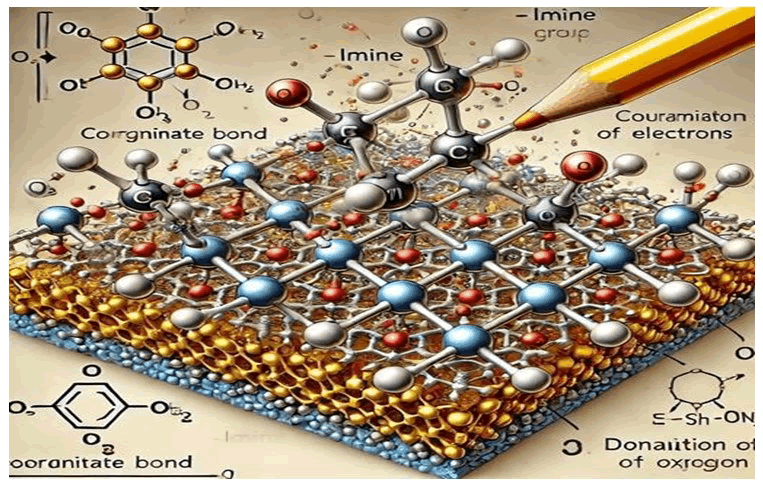
Figure 1. Adsorption mechanism of Schiff bases on a metal surface.
Factors influencing inhibition efficiency of Schiff bases
Molecular structure
The molecular structure of Schiff bases significantly impacts their inhibition efficiency. Schiff bases are formed through the condensation reaction between primary amines and carbonyl compounds, typically aldehydes or ketones. The efficiency of Schiff bases as corrosion inhibitors depends on the presence and type of substituents on the aromatic rings or the backbone of the molecule. Substituents such as -OH, -NH2, -NO2, and -Cl can alter the electronic properties of the Schiff base, affecting its ability to adsorb onto metal surfaces and inhibit corrosion.
For example, electron-donating groups like -OH and -NH2 enhance the electron density on the Schiff base molecule, improving its interaction with metal surfaces and, consequently, its inhibition efficiency. Conversely, electron-withdrawing groups such as -NO2 can reduce the molecule's electron density, leading to decreased inhibition efficiency [20]. Additionally, the planarity and steric effects of the Schiff base structure also influence its ability to cover and protect the metal surface.
Type of metal
The effectiveness of Schiff bases as corrosion inhibitors varies depending on the type of metal being protected. Schiff bases have been studied for their inhibition efficiency on various metals including mild steel, copper, and aluminum.
Environmental conditions
Environmental conditions such as pH, temperature, and ionic strength play a crucial role in the effectiveness of Schiff bases as corrosion inhibitors.
Concentration effects
The concentration of Schiff bases in the corrosive environment is directly related to their inhibition efficiency. Generally, an increase in the concentration of the Schiff base enhances the formation of a protective film on the metal surface, leading to improved corrosion protection. However, beyond a certain concentration, the efficiency may plateau or even decrease due to the possibility of aggregation or excessive adsorption, which can hinder the formation of a uniform protective layer [29,30].
Inhibition efficiency of Schiff bases on different metals
Mild steel: Schiff bases are particularly effective in inhibiting the corrosion of mild steel, a common material in industrial applications due to its versatility and cost-effectiveness. The inhibition efficiency of Schiff bases on mild steel stems from their molecular structure, which typically includes aromatic rings and nitrogen atoms. These structural features facilitate the adsorption of Schiff bases onto the steel surface, forming a protective layer that prevents corrosive agents from interacting with the metal.
Mechanism of inhibition: The aromatic rings in Schiff bases provide π-electron clouds that interact with the metal surface, enhancing adsorption. The nitrogen atoms in the Schiff base molecule can form coordination bonds with the iron atoms in mild steel, creating a robust protective film. This film acts as a barrier, reducing the rate of corrosion by limiting the access of corrosive ions to the steel surface [31]. Sinha and Singh [32] demonstrated that Schiff bases with electron-donating groups exhibit better inhibition performance due to increased electron density on the molecule, which enhances its interaction with the steel surface. El-Etre [33] found that the effectiveness of Schiff bases in acidic media is influenced by their molecular structure, with some Schiff bases showing remarkable protection due to their ability to form stable surface complexes.
Copper: The corrosion inhibition of copper using Schiff bases is also well-documented, with Schiff bases proving effective in preventing copper degradation in various environments. The effectiveness of Schiff bases on copper largely depends on their ability to form stable coordination complexes with copper ions, which can protect the metal surface from corrosive attack [34-37].
Mechanism of inhibition: Schiff bases inhibit copper corrosion by forming complexes with copper ions, which prevents the ions from participating in the corrosion process. This complexation creates a protective layer on the copper surface, reducing the rate of corrosion. The structure of the Schiff base, including the nature of substituents and the presence of donor atoms, significantly affects its ability to interact with copper [22]. Karthikeyan and Subhashini [38] reviewed various Schiff base derivatives and their effectiveness in inhibiting copper corrosion, highlighting the role of functional groups in enhancing corrosion protection. Ghorbani and Parsa [39,40] demonstrated that Schiff bases with multiple functional groups provide superior protection due to their ability to form more stable complexes with copper ions.
Aluminum: The use of Schiff bases as corrosion inhibitors for aluminum has been less studied compared to mild steel and copper, but they still offer significant protection. Aluminum forms a passive oxide layer on its surface, which provides some inherent corrosion resistance. Schiff bases interact with this oxide layer to enhance its protective properties, thereby improving overall corrosion resistance.
Mechanism of inhibition: Schiff bases inhibit aluminum corrosion by interacting with the aluminum oxide layer, forming a protective barrier that prevents further oxidation. While the inhibition efficiency may be moderate compared to mild steel and copper, Schiff bases still contribute to the stability and protection of the oxide layer, particularly in acidic or neutral environments [23]. Narayan and Kumari [41] explored Schiff base complexes as inhibitors for aluminum corrosion, highlighting their moderate but significant impact on corrosion rates. Mikhail and El-Kousy [42] reviewed Schiff base inhibitors for aluminum, emphasizing the role of the Schiff base's molecular structure in enhancing interaction with the oxide layer.
Applications of Schiff bases in corrosion protection
Industrial applications
Schiff bases are widely used as corrosion inhibitors in various industrial sectors, notably in the oil and gas industry, due to their effectiveness in combating the harsh corrosive environments typical of these sectors. The oil and gas industry faces significant challenges related to corrosion, which can lead to catastrophic failures in pipelines, storage tanks, drilling equipment, and other infrastructure. The use of Schiff bases as corrosion inhibitors in this industry is crucial for extending the lifespan of equipment, reducing maintenance costs, and preventing environmental hazards.
Oil and gas industry: In the oil and gas industry, the infrastructure is constantly exposed to corrosive agents such as Carbon Dioxide (CO2), Hydrogen Sulfide (H2S), and chloride ions present in crude oil, natural gas, and seawater. Schiff bases, with their ability to form strong complexes with metal ions and adsorb onto metal surfaces, provide an effective means of preventing corrosion. These inhibitors are often added to the fluids used in drilling, production, and transportation to protect metal surfaces from corrosive attack.
For example, Schiff bases derived from aromatic aldehydes and amines have shown high efficiency in inhibiting the corrosion of steel in acidic environments, which are common in oil and gas extraction and processing [33]. Their ability to adsorb onto the metal surface and form a protective layer significantly reduces the rate of corrosion, even under extreme conditions of high pressure and temperature.
In addition to their use in drilling fluids, Schiff bases are also utilized in pipeline corrosion inhibitors. They help protect the internal surfaces of pipelines that transport crude oil and natural gas by forming a barrier that prevents corrosive agents from reaching the metal surface [43]. This application is particularly important in offshore environments, where pipelines are exposed to seawater and other corrosive elements. Schiff bases are particularly effective in acidic environments, such as those encountered in oil well acidizing processes, where hydrochloric acid is used to enhance oil recovery. In such settings, Schiff bases inhibit the corrosion of steel tubing and casings by interacting with the metal surface and forming a barrier that prevents acid attack. Studies have shown that Schiff bases can reduce corrosion rates significantly, thus extending the lifespan of critical infrastructure in the oil and gas sector [31].
Chemical processing industry: Beyond oil and gas, Schiff bases are also employed in the chemical processing industry, where they protect equipment and machinery from corrosion caused by harsh chemicals. For instance, in the production of acids, bases, and other reactive chemicals, equipment made of metals like steel and copper can suffer from severe corrosion. Schiff bases, due to their stability in acidic and alkaline environments, are added to these processes to inhibit corrosion and maintain the integrity of the equipment [44]. In the petrochemical industry, where various chemicals and harsh environments are involved, Schiff bases are used to protect equipment from corrosion. They are particularly useful in processes involving high temperatures and pressures, where traditional inhibitors might fail. Schiff bases' ability to withstand these conditions while providing effective corrosion protection makes them invaluable in petrochemical applications [45].
Coating industry
In the coating industry, Schiff bases are increasingly utilized in the formulation of protective coatings for metals. These coatings are designed to enhance the durability and lifespan of metal surfaces by providing a barrier against corrosive elements. Schiff bases are incorporated into these coatings for their superior corrosion inhibition properties and their ability to form strong bonds with metal surfaces.
Protective coatings: Schiff bases are used in the development of protective coatings that are applied to a variety of metals, including steel, aluminum, and copper. These coatings are often applied in environments where metals are exposed to corrosive agents such as seawater, industrial chemicals, and atmospheric pollutants. The Schiff base molecules in the coating adsorb onto the metal surface, creating a protective layer that prevents the penetration of moisture, oxygen, and other corrosive substances.
In marine environments, for example, coatings containing Schiff bases are applied to ships, offshore platforms, and underwater pipelines to protect against saltwater corrosion. The Schiff bases in these coatings help to prevent rust and pitting, which can lead to structural failure if left unchecked [46].
Schiff bases are incorporated into a variety of protective coatings, including paints, varnishes, and epoxy resins, to improve their corrosion resistance. When used in coatings, Schiff bases function by adsorbing onto the metal surface, forming a protective film that reduces the interaction between the metal and the corrosive environment. This adsorption process is driven by the Schiff base's ability to form coordination bonds with metal atoms, thereby stabilizing the protective layer [47].
Epoxy resins, which are widely used as protective coatings in the automotive, aerospace, and marine industries, benefit significantly from the addition of Schiff bases. The Schiff base molecules enhance the adhesion of the epoxy resin to the metal surface and improve the overall durability of the coating under corrosive conditions. This results in longer-lasting protection for metal structures and components, reducing the need for frequent maintenance and repainting.
Smart coatings: Recent advancements have seen the development of "smart coatings" that incorporate Schiff bases as part of a responsive system. These coatings are designed to release Schiff base inhibitors in response to specific environmental triggers, such as changes in pH or the presence of corrosive agents. The release of the inhibitor provides targeted corrosion protection, making the coating more effective in extending the lifespan of metal components [48].
Hybrid coatings: Recent developments have led to the development of hybrid coatings that combine Schiff bases with other corrosion inhibitors or functional materials to enhance protection. For example, Schiff bases are being incorporated into epoxy resins and other polymer matrices to create coatings that not only provide corrosion resistance but also offer additional properties such as scratch resistance, UV protection, and thermal stability [49].
Mechanical engineering
In mechanical engineering, where metal components are subjected to wear, stress, and corrosive environments, Schiff bases play a crucial role in extending the life of machinery and equipment. The use of Schiff bases in mechanical systems is particularly important in environments where metal parts are exposed to corrosive fluids, high temperatures, and mechanical stress.
Machinery and equipment: Schiff bases are used to protect mechanical components such as gears, bearings, and shafts from corrosion. These components, often made from steel or aluminum, are critical to the operation of machinery in industries ranging from automotive to aerospace. By forming a protective film on these metal surfaces, Schiff bases help to reduce wear and corrosion, leading to longer service life and reduced maintenance costs [50].
Lubricants and additives: In addition to coatings, Schiff bases are also used as additives in lubricants to provide corrosion protection in mechanical systems. These lubricants are applied to moving parts to reduce friction and wear, and the inclusion of Schiff bases enhances their ability to protect against corrosion. The Schiff base molecules in the lubricant form a barrier on the metal surface, preventing corrosive substances from reaching the metal and reducing the risk of corrosion-related failures [51]. In environments where machinery is exposed to moisture and corrosive chemicals, Schiff bases can be added to lubricants to protect metal surfaces from rust and corrosion. This application is particularly important in heavy machinery, automotive engines, and other mechanical systems where metal parts are in constant contact with each other and exposed to corrosive elements [52].
Surface treatments: Surface treatments using Schiff bases are also employed in mechanical engineering to improve the corrosion resistance of metal components. For example, metals used in the construction of bridges, buildings, and industrial machinery can be treated with Schiff bases to form a protective layer that guards against environmental degradation [53]. This treatment extends the service life of the components and reduces the overall cost of maintenance.
Nanotechnology integration
The integration of nanotechnology with Schiff bases represents a cutting-edge approach to enhancing their effectiveness as corrosion inhibitors. Nanotechnology offers the ability to manipulate materials at the molecular and atomic levels, allowing for the development of innovative solutions that can significantly improve the protective properties of Schiff bases.
Nanocomposite coatings: One of the most promising applications of nanotechnology in corrosion protection is the creation of nanocomposite coatings. These coatings are composed of nanoscale materials dispersed within a matrix, often a polymer that includes Schiff bases. The nanoscale particles provide enhanced mechanical strength, better adhesion, and improved barrier properties to the coating, while the Schiff bases contribute to active corrosion inhibition.
Nanocomposite coatings with Schiff bases have been shown to offer superior corrosion resistance compared to traditional coatings. The nanoparticles within the coating can fill micro-defects and pores, reducing the penetration of corrosive agents. Additionally, the Schiff bases can interact with the metal surface, forming a protective layer that prevents corrosion. This dual mechanism of action leads to a more durable and effective corrosion protection system [54].
Nanocapsules for controlled release: Another innovative application of nanotechnology is the use of nanocapsules to deliver Schiff bases in a controlled manner. Nanocapsules are tiny, hollow particles that can encapsulate corrosion inhibitors, releasing them slowly over time or in response to specific environmental triggers, such as changes in pH or the presence of corrosive ions.
This controlled release approach ensures that the Schiff bases are available to protect the metal surface when and where they are most needed, thereby extending the lifespan of the protective coating and enhancing its efficiency. The use of nanocapsules also allows for the precise delivery of inhibitors, reducing the amount of material needed and minimizing environmental impact [48].
Nanoscale surface treatments: Nanotechnology also enables the development of nanoscale surface treatments that can enhance the adsorption of Schiff bases onto metal surfaces. By modifying the surface at the nanoscale, it is possible to create more active sites for Schiff base molecules to bond with, leading to a stronger and more uniform protective layer. This approach can be particularly useful for metals that are difficult to protect with traditional methods, such as aluminum or magnesium alloys [53].
Research and development: Ongoing research into the integration of nanotechnology with Schiff bases is focused on optimizing the size, shape, and composition of nanoparticles and nanocapsules to achieve the best possible corrosion protection. Future developments in this area could lead to the creation of next-generation coatings and surface treatments that offer unprecedented levels of durability and efficiency, particularly in challenging industrial environments [44].
Schiff bases offer several key benefits as corrosion inhibitors, making them valuable across various industries, particularly in environments where metal corrosion is a significant concern. Some of the primary advantages include:
While the use of Schiff bases as corrosion inhibitors has shown significant promise, there are several potential areas for future research that could further enhance their effectiveness and broaden their applications:
Development of green Schiff bases: There is a growing interest in developing environmentally friendly (green) Schiffbases derived from natural sources or renewable materials. Future research could focus on synthesizing Schiffbases from bio-based materials to reduce the environmental impact and make them more sustainable for large- scale industrial use.
Exploration of new Schiff base derivatives: Research could explore the synthesis of new Schiff base derivatives withenhanced corrosion inhibition properties. By modifying the molecular structure, particularly by introducing differentfunctional groups or using heterocyclic compounds, it may be possible to create Schiff bases with superiorperformance in more challenging environments).
Application in smart coatings: The development of smart coatings incorporating Schiff bases that respond toenvironmental stimuli (e.g., changes in pH or the presence of corrosive agents) is an exciting area of research.Future studies could focus on optimizing the release mechanisms of Schiff bases in smart coatings to achieve moretargeted and efficient corrosion protection.
Nanotechnology integration: The integration of Schiff bases with nanotechnology presents a promising avenue forenhancing their corrosion inhibition capabilities. For example, incorporating Schiff bases into nanocompositecoatings or using nanocapsules for the controlled release of Schiff bases could lead to more effective and durablecorrosion protection systems.
Field testing and industrial applications: While laboratory studies have shown the effectiveness of Schiff bases,there is a need for extensive field testing in real-world industrial environments. Future research should aim toevaluate the long-term performance of Schiff bases in large-scale applications, particularly in the oil and gas,marine, and construction industries, to ensure their reliability and cost-effectiveness.