
Research & Reviews: Research Journal of Biology
 Menu
MenuISSN: 2322-0066
ISSN: 2322-0066
Yea-Lih Lin*
Department of Human Genetics, University of Montpellier, Montpellier, France
*Corresponding Author:
Received: 15-Jul-2024, Manuscript No. JOB-24-141764; Editor assigned: 17-Jul-2024, Pre QC No. JOB-24-141764 (PQ); Reviewed: 31-Jul-2024, QC No. JOB-24-141764; Revised: 31-May-2025, Manuscript No. JOB-24-141764 (R);Published: 07-Jun-2025, DOI: 10.4172/2322-0066.13.3.002
Citation:Lin YL. Replication Stress and Nucleic Acid Immunity: From Senescence to Cancer Therapy. RRJ Biol. 2025;13:003.
Copyright:© 2025 Lin YL. This is an open-access article distributed under the terms of the Creative Commons Attribution License, which permits unrestricted use, distribution and reproduction in any medium, provided the original author and source are credited.
Visit for more related articles at Research & Reviews: Research Journal of Biology
Oncogene-Induced Senescence (OIS) is triggered by two non-mutually exclusive signaling pathways, the DNA Damage Response (DDR) and the cGAS-STING cytosolic DNA sensing pathway. Whether these pathways are interconnected or act independently has been unclear. Here, we summarize our recent findings on how the nucleases MRE11 and TREX1 coordinate the replication stress response and interferon signaling to regulate OIS. We also discuss some of the unanswered questions raised by this study. Finally, we speculate on the potential application of our findings in cancer therapy.
Oncogene-Induced Senescence (OIS); Replication Stress (RS); cGAS-STING pathway; Type I Interferon (IFN); Nucleases MRE11 and TREX1
Interplay between replication stress, cytosolic DNA and type I interferon response in OIS
Replication Stress (RS) generally refers to alterations in the dynamics of replication fork progression, including fork slowing, stalling, or aberrant acceleration of fork speed [1]. RS can originate from endogenous or exogenous sources and lead to genomic instability, a hallmark of cancer. Recently, we and others have shown that RS induces accumulation of cytosolic DNA, activation of the cyclic GMP-AMP Synthase (cGAS) and the stimulator of interferon genes (STING) pathway as well as type I Interferon (IFN) response [2,3]. Oncogene-Induced Senescence (OIS), which occurs in response to replication stress and DNA damage caused by oncogene activation, acts as a critical barrier to cancer development by preventing uncontrolled cell proliferation [4]. Additionally, OIS can also be induced by the activation of the cGAS-STING pathway through cytosolic DNA sensing [5]. Our recent findings highlight the interaction between RS, cytosolic DNA and the type I IFN response in OIS [6].
In this work, we showed that inhibiting the nuclease MRE11 alleviates oncogene RASV12-induced senescence, including proliferation arrest, Senescence-Associated Secretory Phenotype (SASP), β-galactosidase activity and Senescence-Associated Heterochromatin Formation (SAHF), presumably by mitigating OIS-induced fork slowdown and micronuclei formation. These results align with our previous observation that MRE11 is involved in the release of nascent DNA into cytoplasm under replication stress in SAMHD1-depeleted cells [2]. Moreover, we revealed that the endonuclease activity of MRE11 may play a predominant role in promoting RASV12-induced RS. These data imply that MRE11 links oncogene-induced RS with cytosolic DNA fragments, promoting OIS. Using small molecule inhibitors, we showed that the cGAS-STING cytosolic DNA sensing pathway is implicated in RASV12-induced OIS, as previously reported [7]. This prompted us to explore the possibility of regulating OIS through modulating the levels of cytosolic DNA by overexpressing the cytosolic 3’-5’ exonuclease TREX1 (Three prime Repair Exonuclease 1) or the nuclease-dead mutant TREX1-D18N. As expected, overexpression of TREX1 alleviated RASV12-induced phenotypes, suggesting that cytosolic DNA fragments contribute to OIS. Surprisingly, TREX1-D18N overexpression promoted senescence independently of RASV12 induction or replication stress, presumably due to the stabilization of endogenous cytosolic DNA species and the upregulation of the cGAS-STING pathway. Finally, we showed that Interferon-β (IFN-β) treatment induced RS, DNA damage and senescence. Remarkably, we found that blocking signaling through type I IFN receptor partially rescued RASV12-induced RS and OIS, suggesting that RASV12 may initiate an autocrine feedback loop to enhance the senescence signal. Taken together, our findings underscore the crosstalk between RS, cytosolic DNA, type I IFN signaling and OIS.
Our study also raises unanswered questions that warrant further investigation. Micronuclei are broken chromosome fragments enclosed in separate nuclear envelopes after mitosis. It was reported that cGAS accumulates in micronuclei after micronuclear envelope rupture and activates innate immune signaling [8,9]. However, two recent studies indicate that micronuclei may not be potent activators of the cGAS-STING pathway. Indeed, micronuclei induced by irradiation, RS or chromosome segregation errors do not efficiently activate cGAS due to direct inhibition by nucleosomes [10]. Furthermore, gamma-ray irradiation activates STING independently of micronuclei formation and the localization of cGAS to micronuclei. In our study, we showed that RASV12 induces micronuclei formation. In fibroblasts overexpressing TREX1-D18N, we observed co-localization of cGAS with micronuclei. Using small molecule inhibitors, we confirmed that the cGAS-STING pathway is involved in RASV12-induced OIS. However, whether these micronuclei are sufficient to activate the cGAS-STING pathway and trigger senescence remains to be determined. We found that RASV12-induced micronuclei formation can be attenuated by MRE11 inhibition, which may mitigate the liberation of cGAS from nucleosome sequestration, consequently inhibiting RASV12-induced senescence. Additionally, it is also plausible that short cytosolic DNA fragments may be directly generated under RS induced by OIS, as previously reported in our study, potentially serving as the primary activator of the cGAS-STING pathway.
TREX1 is the primary cytosolic exonuclease reported to degrade single-stranded DNA (ssDNA), double-stranded DNA (dsDNA) and RNA: DNA hybrids. Dysfunction of TREX1 leads to the accumulation of nucleic acid species in the cytoplasm, which activates the cGAS-STING pathway and the innate immune response. In cells overexpressing TREX1, we observed the co- localization of TREX1 with micronuclei, suggesting that TREX1 may enter into micronuclei and potentially degrade the chromosome fragments inside, triggering cGAS-STING activation. TREX1 is predominantly localized in the cytoplasm. However, TREX1 has been shown to translocate into the nucleus under genotoxic or mechanical stress, where it exerts its nuclear function. We observed that TREX1-D18N overexpression induces senescence independently of RASV12 induction. This overexpression resulted in DNA breaks and micronuclei formation without affecting fork progression. The simplest hypothesis is that the dominant negative mutant TREX1-D18N prevents TREX1 from degrading endogenous cytosolic DNA, allowing it to accumulate to a threshold level that activates the cGAS-STING pathway and the type I IFN response, ultimately triggering senescence. However, it remains unclear whether the senescence induced by TREX1-D18N is primary attributed to its canonical role as a cytosolic nuclease or its yet-to-be-identified role in the nucleus. It is plausible that the nuclear function of TREX1-D18N could contribute to the onset of senescence, alongside its established role as cytosolic nuclease that activates cGAS-STING signaling and the type I IFN response.
Type I IFNs induce the expression of Interferon-Stimulated Genes (ISGs), which regulate various cellular processes. A previous study has shown that induction of ISG15 expression by interferons accelerates replication fork progression, leading to chromosome breaks. In contrast, our study found that IFN-β treatment slows down replication fork progression and induces chromosome breaks. This discrepancy may be due to the duration of IFN-β treatment. Indeed, we did observe accelerated fork progression after a short-term IFN-β treatment (unpublished data). However, to induce senescence, human fibroblasts were exposed to IFN-β for at least five days, which may slow down fork progression through an indirect mechanism. It is still unclear whether and how IFNs induce senescence through replication stress. Exploring the role of ISG15 in fork progression and stability during OIS would provide new insights into this mechanism.
Oncogene-induced replication stress drives genomic instability and cancer development. Conversely, RS is also viewed as the Achilles’ heel of cancer cells. Increasing RS to intolerable levels to kill cancer cells has been widely used as a therapeutic strategy. Our study revealed the crucial roles of nucleases MRE11 and TREX1 at the intersection of replication stress, nucleic acid immunity and senescence, with potential applications in cancer therapy. On one hand, increasing RS induces senescence to inhibit cancer cell proliferation; on the other hand, targeting TREX1 induces type I IFN response. Both processes enhance nucleic acid immunity, activating anti-cancer immune cells and ultimately triggering immunogenic cell death to prevent tumor malignancy. Our findings provide new insights into the therapeutic strategy of targeting replication stress in cancer treatment and pave the way for the development of new therapeutic strategies for cancer (Figure 1).
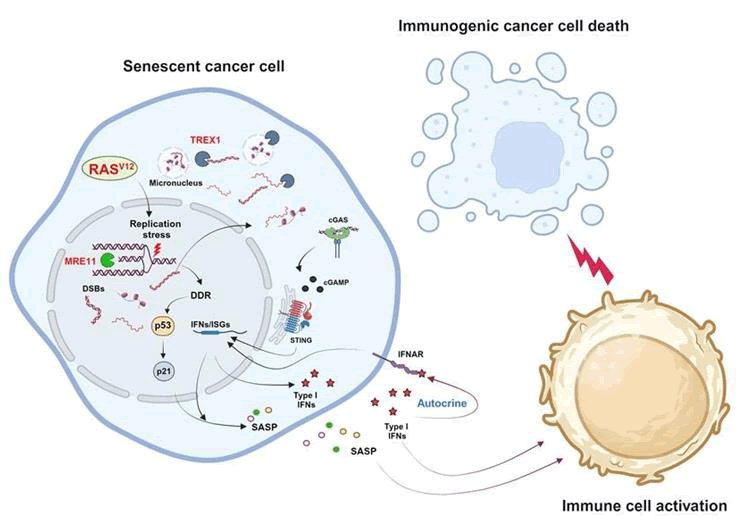
Figure 1. Targeting replication stress to trigger nucleic acid immunity for cancer treatment.
The oncogene RASV12 induces senescence through two complementary mechanisms: thr DNA damage response and the cGAS/STING cytosolic DNA sensing pathways. However, the connections between these two mechanisms has been unclear. Our data indicate that MRE11 plays a central role in RASV12-induced RS and the release of cytosolic DNA fragments including micronuclei, which ultimately induces SASP and production of type I IFNs. These MRE11-related OIS phenotypes can be mitigated by TREX1 overexpression and inhibition of the cGAS/STING pathway, suggesting a crosstalk between DDR and cytosolic DNA sensing in OIS. Notably, RASV12-induced senescence can be counteracted by blocking type I IFN receptor signaling, suggesting that OIS triggers autocrine feedback regulation. Our results indicate that MRE11 and TREX1 regulate oncogene RASV12-induced senescence by coordinating replication stress, DDR and type I interferon signaling. These findings may pave the way for the development of effective therapeutic strategies against cancer. Targeting RS and TREX1 to induce senescence and immunogenic cell death by enhancing nucleic acid immunity may be an effective approach to prevent tumor malignancy.
The author thanks Philippe Pasero and Jérôme Poli for their comments on the manuscript.
YLL wrote, read and approved the content of this article.
Not applicable.
Not applicable.
The author declares no competing interests.
[Crossref] [Google Scholar] [PubMed]
[Crossref] [Google Scholar] [PubMed]
[Crossref] [Google Scholar] [PubMed]
[Crossref] [Google Scholar] [PubMed]
[Crossref] [Google Scholar] [PubMed]
[Crossref] [Google Scholar] [PubMed]
[Crossref] [Google Scholar] [PubMed]
[Crossref] [Google Scholar] [PubMed]
[Crossref] [Google Scholar] [PubMed]
[Crossref] [Google Scholar] [PubMed]